


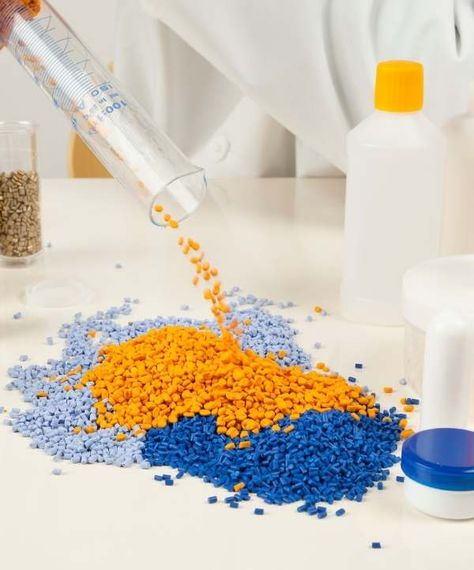
Table of Contents
- What Are PP Impact Modifiers?
- How Do PP Impact Modifiers Work?
- What Are Mineral Fillers?
- PP Impact Modifiers vs Mineral Fillers: Key Differences
- When Should Manufacturers Use PP Impact Modifiers?
- Automotive Components
- Products Used at Low Temperatures
- Consumer and Industrial Products
- When Should Manufacturers Use Mineral Fillers?
- Rigid Molded Components
- Cost Optimization
- Construction and Industrial Products
- Can Impact Modifiers and Mineral Fillers Be Used Together?
- How to Choose the Right Material for Polypropylene
- Explore Polymer Additive Solutions
- Conclusion
- Are PP impact modifiers better than mineral fillers?
- Can polypropylene use both impact modifiers and mineral fillers?
- Do mineral fillers improve impact resistance?
- Which material is better for automotive plastics?
Choosing the right materials for polypropylene compounds requires balancing impact resistance, stiffness, dimensional stability, and production cost. PP Impact Modifiers and mineral fillers serve different purposes: impact modifiers primarily improve toughness, while mineral fillers are often selected to adjust rigidity, shrinkage, and material cost.
Understanding how these materials work helps manufacturers select suitable formulations for automotive components, packaging, construction products, and industrial applications. The best option depends on the polymer grade, processing conditions, and performance requirements of the finished product.
Selecting suitable PP Impact Modifiers helps manufacturers meet impact resistance targets while maintaining the required balance of stiffness, processability, and cost.
What Are PP Impact Modifiers?
PP impact modifiers are polymer materials incorporated into polypropylene formulations to improve toughness and resistance to impact-related failure. Standard polypropylene offers low weight, chemical resistance, and good processability, but some grades may become brittle under impact, particularly at low temperatures.
A suitable impact modifier can help polypropylene absorb mechanical energy and resist crack initiation or propagation. Depending on the modifier and formulation, benefits may include improved impact strength, low-temperature toughness, and greater durability.
Performance depends on modifier chemistry, concentration, compatibility, dispersion, and the properties of the base polypropylene. Manufacturers should test the final compound under the temperature and loading conditions expected in service.
How Do PP Impact Modifiers Work?
Impact modifiers can create dispersed flexible phases within a polypropylene matrix. These phases may help absorb energy and change how stress develops around potential cracks. The exact mechanism depends on the modifier chemistry, morphology, and compatibility with the polymer.
During compounding, appropriate mixing and dispersion are important for achieving consistent performance. An unsuitable modifier or formulation may fail to deliver the expected improvement or may affect stiffness and processing behavior.
The correct PP Impact Modifiers should be selected according to the polypropylene grade, operating temperature, and impact performance required for the finished part.
What Are Mineral Fillers?
Mineral fillers are inorganic materials added to plastic formulations to modify physical properties and, in some cases, optimize material costs. Common examples include calcium carbonate, talc, silica, and kaolin. Glass fibers are also used as reinforcing materials, although their behavior differs from that of conventional particulate mineral fillers.
In polypropylene compounds, selected fillers can increase stiffness, influence molding shrinkage, improve dimensional control, and modify surface characteristics. Their effect depends on particle size, shape, surface treatment, loading, and dispersion.
For more detail, see our guides to mineral fillers in plastics and talc fillers in polypropylene compounds.
PP Impact Modifiers vs Mineral Fillers: Key Differences
Although both material types can modify polypropylene performance, they are not interchangeable. Impact modifiers are generally chosen to improve toughness, whereas mineral fillers are often used to increase rigidity, manage dimensional changes, or reduce formulation costs.
| Property | PP Impact Modifiers | Mineral Fillers |
|---|---|---|
| Primary purpose | Improve toughness and impact resistance | Adjust stiffness, dimensions, and material cost |
| Impact performance | Can improve impact resistance | Effects vary by filler and formulation |
| Stiffness | May decrease depending on modifier and dosage | Many grades can increase stiffness |
| Dimensional stability | Depends on the complete formulation | Some fillers reduce molding shrinkage |
| Cost considerations | Adds cost but may meet demanding performance targets | May reduce resin use and formulation cost |
| Typical applications | Parts requiring toughness or impact resistance | Rigid molded parts and dimensionally stable products |
These are general tendencies rather than universal rules. Actual results must be confirmed for the specific polypropylene grade, additive system, and processing method.
When Should Manufacturers Use PP Impact Modifiers?
Impact modifiers are appropriate when a polypropylene product must withstand sudden loads, resist cracking, or retain toughness in colder conditions. Selection should be based on the required impact test, service temperature, and acceptable balance between stiffness and toughness.
Automotive Components
Automotive interior and exterior components may need to withstand handling, vibration, and accidental impacts. Impact-modified polypropylene can be considered for trim, protective housings, and other parts where impact performance is a priority. The final formulation must also meet dimensional, appearance, durability, and application-specific requirements.
For automotive applications, PP Impact Modifiers can help improve resistance to impact damage, provided the formulation meets the component’s mechanical and temperature requirements.
Products Used at Low Temperatures
Some polypropylene grades lose impact toughness as temperature decreases. A suitable modifier can improve low-temperature performance, but the magnitude of improvement depends on the modifier type, concentration, and base resin. Testing at the intended service temperature is essential.
Choosing PP Impact Modifiers for low-temperature applications requires testing the compound at the expected service temperature rather than relying on room-temperature results alone.
Consumer and Industrial Products
Containers, housings, protective parts, and reusable products may require better resistance to cracking during drops or repeated handling. Impact modification can help when the unmodified material does not meet the required toughness specification.
When Should Manufacturers Use Mineral Fillers?
Mineral fillers are often suitable when a polypropylene compound needs increased rigidity, controlled shrinkage, or improved cost efficiency without sacrificing essential product requirements.
Rigid Molded Components
Selected mineral-filled polypropylene grades are used in appliance parts, housings, automotive trim, and other molded components where stiffness and dimensional consistency are important. The appropriate filler depends on the required mechanical properties and surface finish.
Cost Optimization
Fillers can replace part of the polymer resin in some formulations, potentially lowering material costs. Manufacturers should evaluate the total cost per acceptable finished part, including processing, scrap, quality control, and any performance trade-offs.
Construction and Industrial Products
Profiles, sheets, housings, and other industrial plastic products may use mineral-filled compounds to meet specific rigidity or dimensional requirements. Chemical exposure, service temperature, and mechanical loading should be considered during material selection.
Can Impact Modifiers and Mineral Fillers Be Used Together?
Yes. Some polypropylene formulations combine an impact modifier with one or more fillers to balance toughness, stiffness, dimensional stability, and cost. This approach can be useful when a single material does not meet all the product requirements.
However, combining materials does not guarantee improved performance. Fillers and impact modifiers can interact, and increasing the concentration of one component may affect the benefits of another. The formulation should therefore be optimized through controlled trials and appropriate testing.
For example, an automotive compound may require sufficient stiffness for dimensional control and enough impact resistance to withstand service loads. The suitable balance depends on the component design, test specifications, processing conditions, and operating environment.
How to Choose the Right Material for Polypropylene
Before selecting an additive system, manufacturers should define the most important performance targets and evaluate the trade-offs between them. When comparing PP Impact Modifiers with mineral fillers, the main priority should be the required performance of the finished product.
- Impact requirements: Identify the required impact strength and test temperature.
- Stiffness: Determine the rigidity and deformation limits for the finished part.
- Dimensional control: Evaluate shrinkage, warpage, and dimensional tolerances.
- Processing method: Consider injection molding, extrusion, or the actual manufacturing process.
- Compatibility and dispersion: Confirm that the selected materials perform consistently in the polypropylene matrix.
- Cost and quality: Compare formulation cost with finished-part performance and production yield.
- Validation: Test the compound under relevant mechanical, thermal, and processing conditions.
Manufacturers seeking to improve impact performance can also read our guide to improving impact strength in PP compounds.
Explore Polymer Additive Solutions
Explore the AasadChimie product range for information about available industrial chemical and polymer material solutions. You can also browse our technical article library for related topics.
For broader information about plastics and polymer applications, consult Plastics Europe and relevant scientific publications available through ScienceDirect.
Conclusion
PP Impact Modifiers and mineral fillers address different needs in polypropylene manufacturing. Impact modifiers are primarily used to improve toughness and impact resistance, while mineral fillers can increase stiffness, influence dimensional stability, and help optimize material costs.
The right choice depends on the polymer grade, application requirements, processing method, and acceptable performance trade-offs. In some formulations, combining both material types can provide a practical balance of properties, provided the final compound is properly tested.
To discuss material requirements for a specific application, visit the AasadChimie contact page.
Are PP impact modifiers better than mineral fillers?
Neither is universally better. Impact modifiers primarily improve toughness, while mineral fillers are commonly used to adjust stiffness, dimensional stability, and material cost.
Can polypropylene use both impact modifiers and mineral fillers?
Yes. Some formulations combine them to balance impact resistance, rigidity, and cost, but the final compound must be tested.
Do mineral fillers improve impact resistance?
Their effect varies by filler type, concentration, and formulation. They should not be assumed to provide the same impact improvement as a suitable impact modifier.
Which material is better for automotive plastics?
It depends on the component. Parts requiring impact resistance may benefit from impact modification, while parts requiring rigidity or dimensional control may benefit from mineral fillers.