


PP Impact Testing: Izod vs Charpy
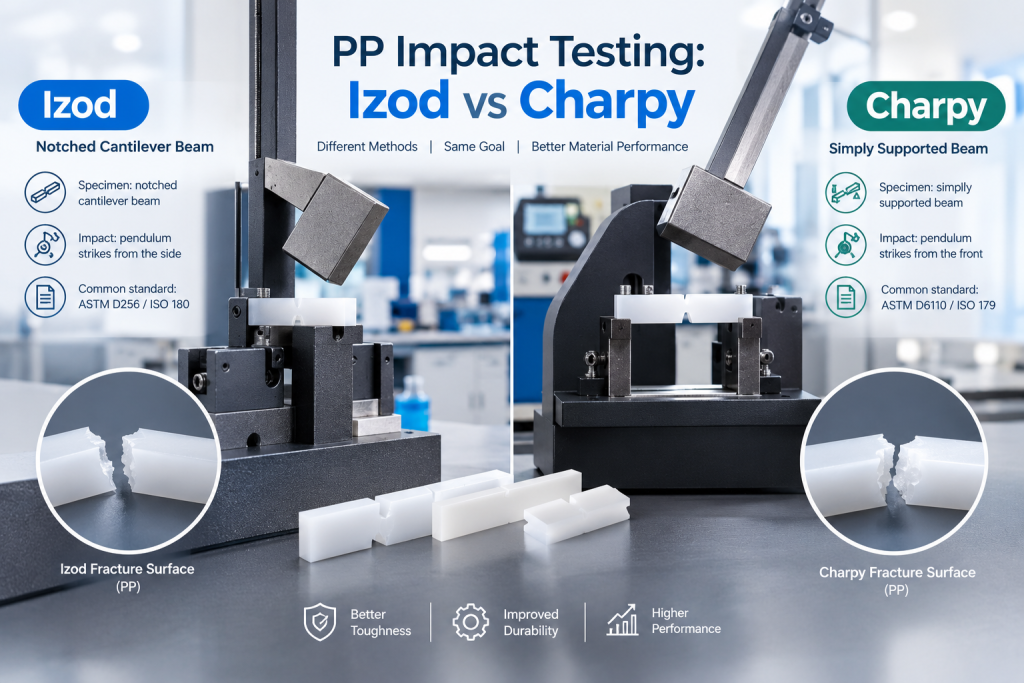
PP Impact Testing: Izod vs Charpy PP impact testing evaluates the resistance of polypropylene (PP) to sudden loading and helps manufacturers compare impact performance under standardized conditions. Izod and Charpy are two widely used methods for assessing the impact behaviour of plastics. Understanding the differences between these methods helps manufacturers select suitable polypropylene grades for […]
Polypropylene Compound Quality Control: Key Tests
Polypropylene Compound Quality Control: Key Tests Polypropylene compound testing helps manufacturers verify material consistency, processing performance, and mechanical properties before production or delivery. Common quality control tests include melt flow rate, tensile strength, flexural properties, density, and ash content. The appropriate testing program depends on the compound formulation and the requirements of the final product. […]
Homopolymer: Key Properties and Applications

PP Homopolymer vs Copolymer: Key Differences Homopolymer polypropylene is a thermoplastic used in plastic manufacturing because of its stiffness, low density, chemical resistance, and processability. Compared with copolymer grades, it is often suitable for rigid products, fibers, and industrial components. The best material depends on the mechanical properties and processing requirements of the final product. […]
Plastic Raw Materials in Turkey: PP, PE, PVC
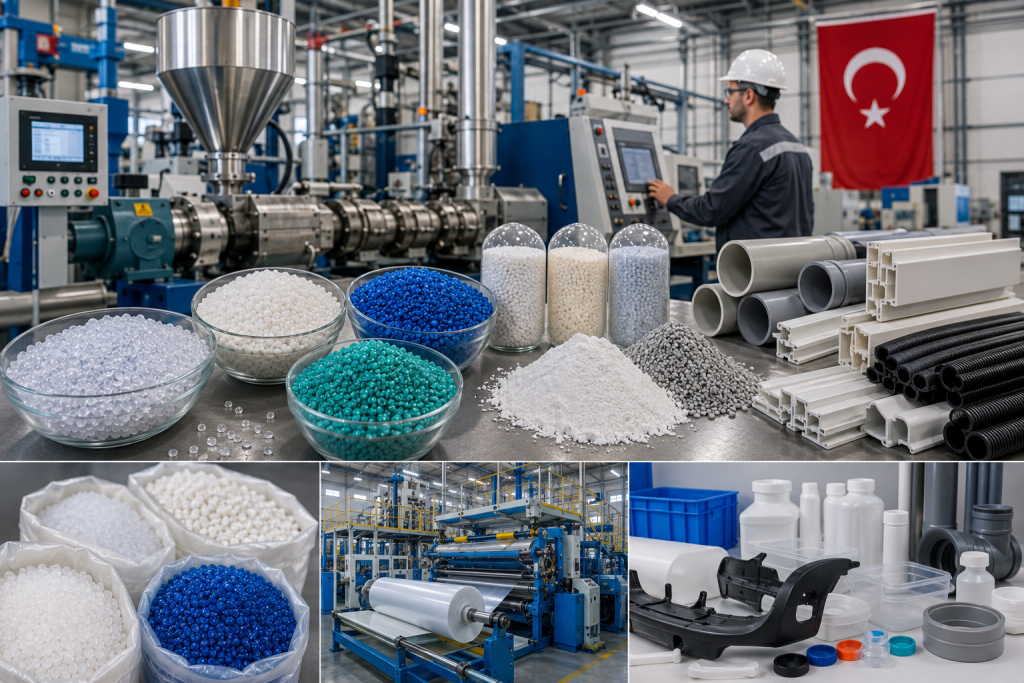
Plastic Raw Materials in Turkey: PP, PE and PVC Plastic Raw Materials in Turkey are essential to packaging, construction, automotive manufacturing, household goods, agriculture, and many other industries. The most widely used materials include polypropylene (PP), polyethylene (PE), and polyvinyl chloride (PVC). Understanding their properties, applications, prices, and supply conditions helps manufacturers select suitable resins […]
Kaolin Fillers in Plastics: Benefits & Uses
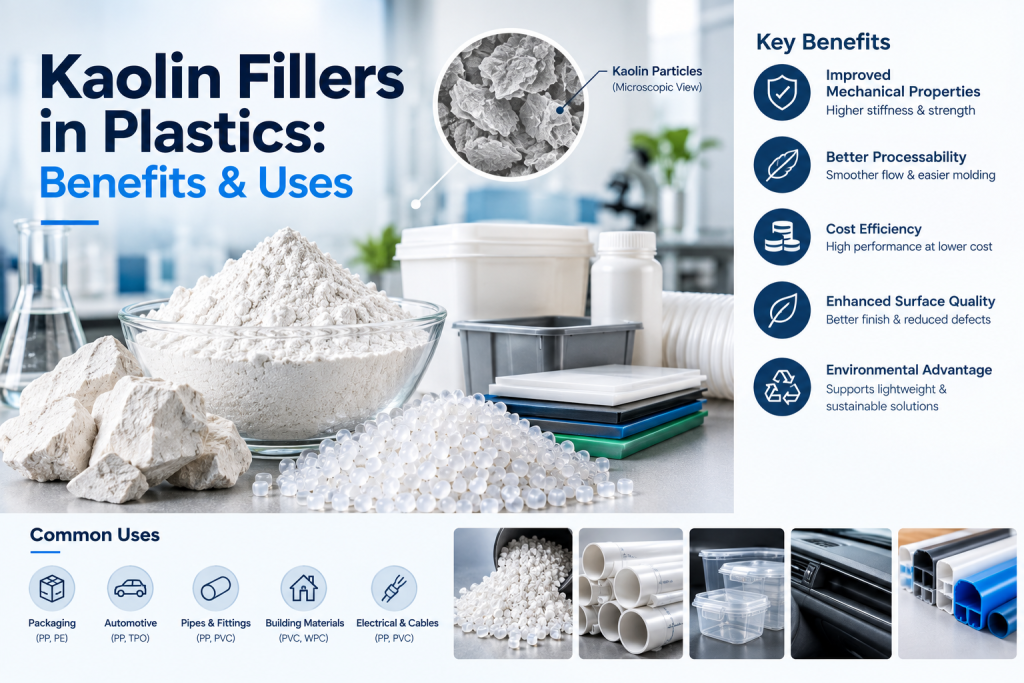
Advanced Kaolin Fillers in Plastics: Benefits and Industrial Applications The development of high-performance plastic materials requires advanced solutions that improve mechanical properties, processing efficiency, and product durability. One of the important materials used in polymer modification is Kaolin Fillers. Kaolin fillers are mineral-based materials that enhance the performance of plastic compounds by improving dimensional stability, […]
Silica Fillers in Polymers: Types & Applications
Silica Fillers in Polymer Compounds: Types and Applications Silica Fillers are silicon dioxide-based materials used in selected polymer formulations to modify rheology, reinforcement, surface characteristics, and functional performance. Their effects depend on silica type, particle size, specific surface area, surface chemistry, dispersion, and compatibility with the polymer matrix. Precipitated silica and fumed silica serve different […]
Mineral Fillers in Plastics: Types & Benefits
Mineral Fillers in Plastics: Types, Benefits and Applications Mineral Fillers in Plastics are inorganic materials incorporated into polymer formulations to modify stiffness, dimensional stability, processing behavior, and material cost. Common examples include calcium carbonate, talc, silica, and kaolin. Each filler has different characteristics, so the right choice depends on the polymer, manufacturing process, and required […]
Talc Fillers in Polypropylene: Benefits & Uses

Talc Fillers in Polypropylene: Benefits and Applications Polypropylene (PP) is widely used in automotive components, household products, and industrial parts because it is lightweight, chemically resistant, and easy to process. However, applications that require greater stiffness, improved dimensional stability, or better heat resistance may benefit from mineral reinforcement. Talc Fillers are commonly incorporated into polypropylene […]
Calcium Carbonate Fillers in Plastics: Benefits
Calcium Carbonate Fillers in Plastics: Properties and Applications Calcium Carbonate Fillers are widely used in plastic manufacturing to modify material properties and manage formulation costs. Depending on the grade, concentration, polymer type, and processing method, these mineral materials can help increase stiffness, influence shrinkage, and improve the cost efficiency of plastic compounds. From polypropylene (PP) […]
Functional Fillers in Polymers: Types & Uses
Functional Fillers in Polymer Manufacturing: Types and Applications Polymer manufacturers use fillers to adjust the mechanical, thermal, dimensional, and economic performance of plastic compounds. The right polymer fillers can improve stiffness, reduce shrinkage, and help manufacturers develop materials suited to specific production requirements. The choice of filler depends on the polymer matrix, processing method, required […]