


Impact Modifier for Polypropylene Compounds
Impact Modifier for Polypropylene Compounds: Selection Guide Choosing the right impact modifier for polypropylene compounds helps manufacturers improve toughness, reduce brittle failure, and meet the mechanical requirements of demanding plastic applications. The best solution depends on the polypropylene grade, target impact strength, operating temperature, processing method, and acceptable changes in stiffness and melt flow. For […]
Impact Modifiers for Injection Molding
Impact Modifiers for Injection Molding: Benefits and Applications Impact modifiers for injection molding are polymer additives used to improve the toughness and impact resistance of plastic components. The appropriate modifier depends on the base resin, molding conditions, required mechanical properties, and the environment in which the finished part will operate. Selecting a compatible formulation can […]
Antioxidants for Recycled Polyolefins
Why Recycled Polypropylene and Polyethylene Need Fresh Antioxidants Recycled polypropylene (rPP) and recycled polyethylene (rPE) may require additional antioxidant stabilization because previous processing and service exposure can reduce their resistance to further oxidation. Extrusion, melting, heat, and shear can contribute to polymer degradation, particularly when the material has experienced several processing cycles. Re-stabilization helps compounders […]
Polypropylene Gel Formation: Causes and Solutions
Polypropylene Gel Formation: Causes and Solutions Polypropylene Gel Formation is a common quality problem in plastic extrusion that can affect film appearance, surface quality, and product consistency. These defects may result from polymer degradation, unmelted resin, contamination, incompatible materials, or poor additive dispersion. To reduce polypropylene gel formation, manufacturers should identify the source of the […]
Prevent Die Build-Up: 10 Solutions for Extrusion
Prevent Die Build-Up in Plastic Extrusion: 10 Solutions Prevent die build-up in plastic extrusion by controlling melt temperature, reducing polymer degradation, improving raw material quality, selecting compatible processing additives, and maintaining clean extrusion equipment. These measures can help manufacturers reduce die drool, improve surface quality, and maintain consistent production. Die build-up occurs when polymer residue, […]
Calcium Carbonate Dispersion: 10 Methods
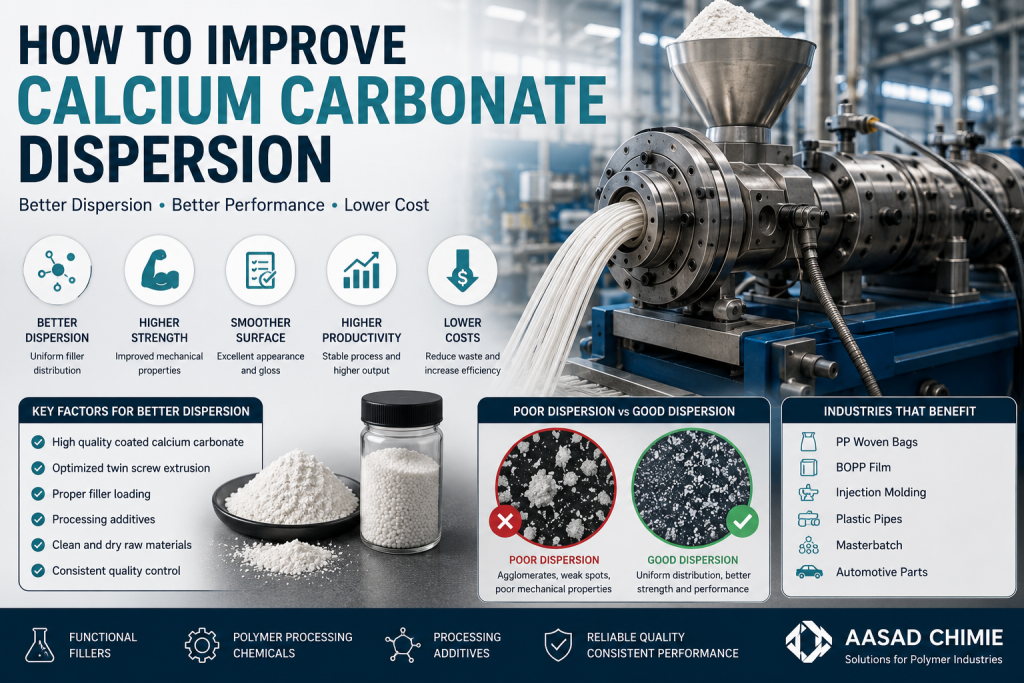
Calcium Carbonate Dispersion: 10 Methods for Better Polymers Calcium carbonate dispersion is a key factor in the quality and processing performance of polypropylene compounds, masterbatch, films, and molded plastic products. Poor dispersion can cause visible white spots, surface defects, inconsistent mechanical properties, and unstable extrusion. Manufacturers can improve filler distribution by selecting suitable calcium carbonate, […]
Polypropylene Costs: 12 Ways to Save
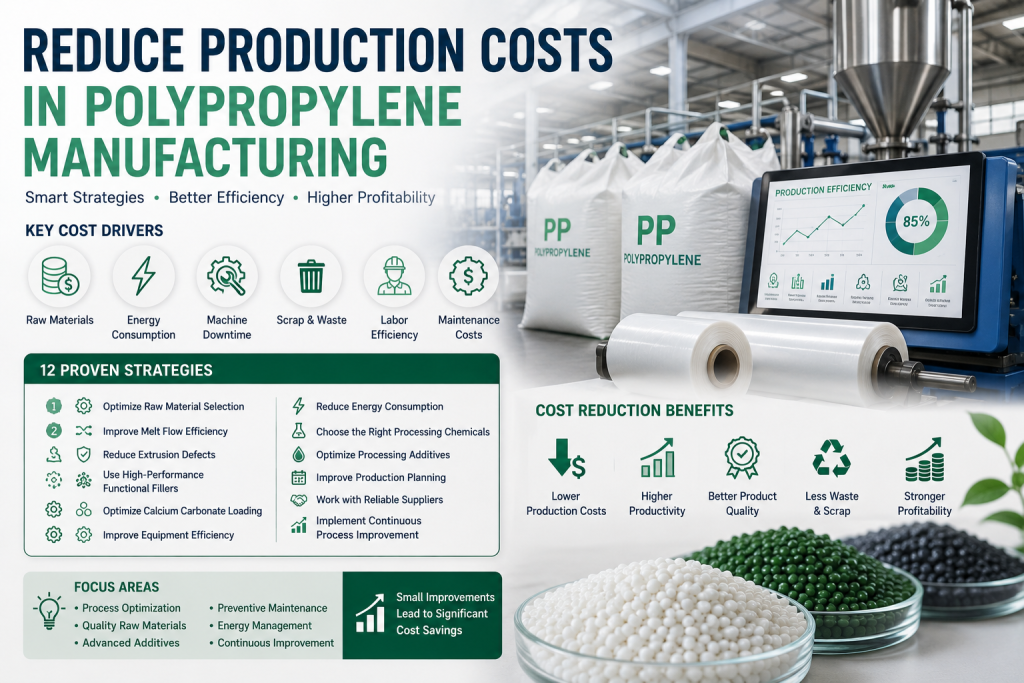
Polypropylene Costs: 12 Proven Ways to Save Polypropylene Costs are a major concern for plastic manufacturers seeking to improve profitability without compromising product quality. By optimizing raw material selection, improving processing efficiency, reducing waste, and controlling energy consumption, manufacturers can lower production expenses and increase operational efficiency. What Factors Affect Polypropylene Costs? Polypropylene Costs depend […]
Improve PP Melt Flow: 8 Practical Methods
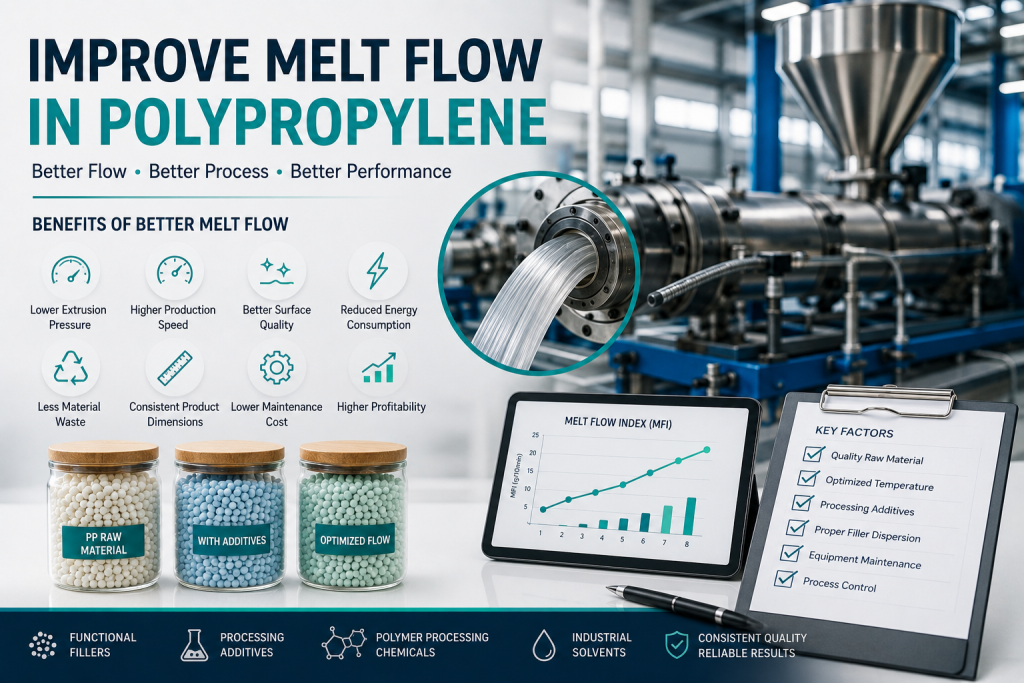
Improve PP Melt Flow: 8 Practical Methods PP Melt Flow is an important factor in polypropylene manufacturing because it affects processing stability, production speed, surface quality, and material waste. Manufacturers can optimize melt flow by selecting the correct resin grade, controlling processing temperatures, improving filler dispersion, using compatible additives, and maintaining extrusion equipment. These methods […]
Reduce PP Extrusion Defects: 10 Solutions
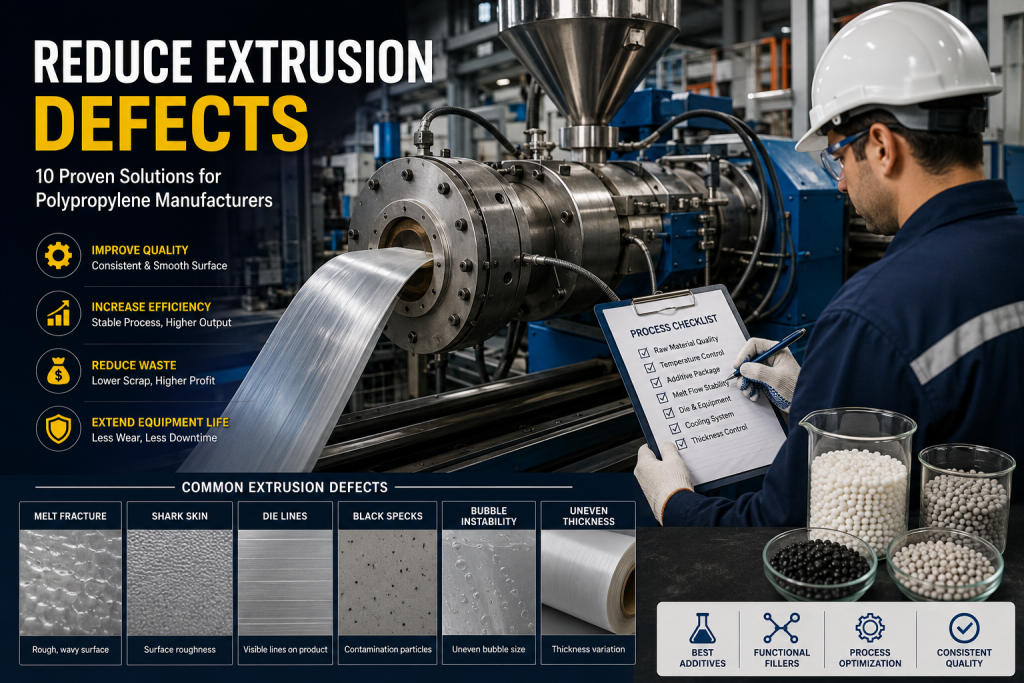
Reduce PP Extrusion Defects: 10 Proven Solutions PP Extrusion Defects can increase material waste, reduce production efficiency, and affect the quality of polypropylene products. Common problems include rough surfaces, melt fracture, die build-up, black specks, and inconsistent dimensions. Manufacturers can reduce these issues by optimizing processing conditions, improving material handling, maintaining equipment, and selecting compatible […]
Plastic Processing Additives: Types & Uses
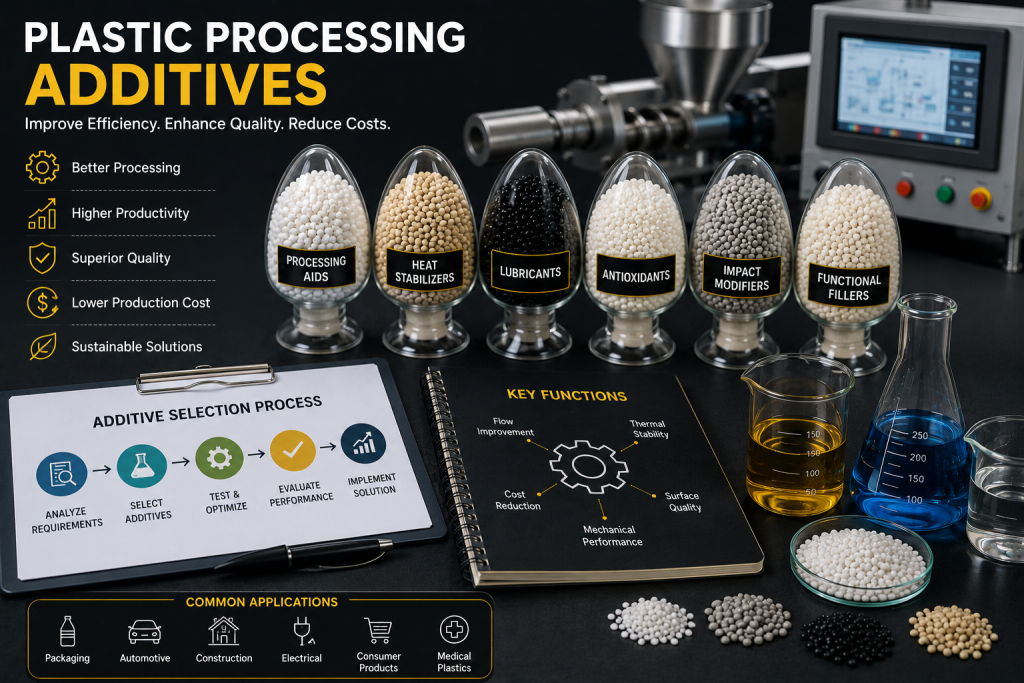
Plastic Processing Additives: Types, Uses and Benefits Plastic processing additives are specialized ingredients used to improve polymer processability, production efficiency, and finished-product quality. They help manufacturers manage friction, melt flow, thermal stability, and material dispersion during extrusion, injection molding, film production, and polymer compounding. The right plastic processing additives depend on the base resin, manufacturing […]