


Table of Contents
- What Are Plastic Raw Materials?
- Overview of the Plastic Raw Materials Market in Turkey
- 1. Polypropylene (PP) in Turkey
- 2. Polyethylene (PE) in Turkey
- 3. Polyvinyl Chloride (PVC) in Turkey
- PP vs. PE vs. PVC: Which Material Should You Choose?
- What Affects Plastic Raw Material Prices in Turkey?
- How to Select a Reliable Supplier
- The Role of Additives and Fillers
- Sourcing Plastic Raw Materials for Industrial Production
- Conclusion
- What are the main plastic raw materials used in Turkey?
- What is polypropylene used for in Turkey?
- What are the main types of polyethylene?
- What is PVC commonly used for?
- What affects polymer prices in Turkey?
- Why are additives used in plastic compounds?
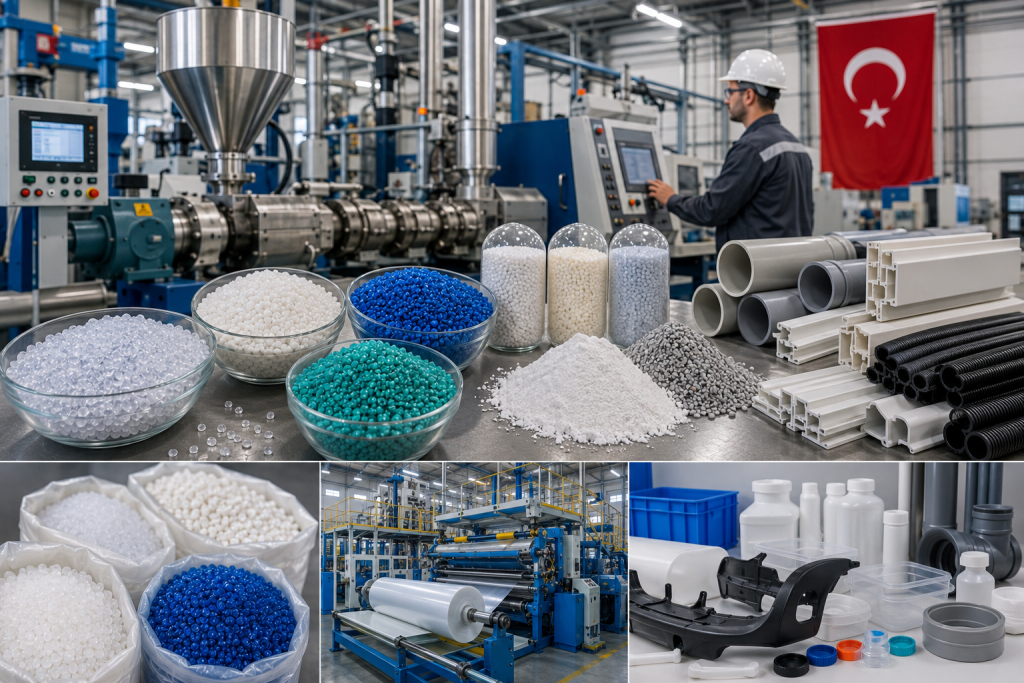
Plastic Raw Materials in Turkey are essential to packaging, construction, automotive manufacturing, household goods, agriculture, and many other industries. The most widely used materials include polypropylene (PP), polyethylene (PE), and polyvinyl chloride (PVC). Understanding their properties, applications, prices, and supply conditions helps manufacturers select suitable resins and improve production efficiency.
What Are Plastic Raw Materials?
Plastic raw materials are polymers supplied in forms such as pellets, granules, or powder. Manufacturers melt, mold, extrude, or process these materials to produce finished plastic products. The appropriate resin depends on mechanical strength, flexibility, heat resistance, chemical compatibility, processing requirements, and final product cost.
For businesses sourcing Plastic Raw Materials in Turkey, choosing a resin based only on its price can lead to processing problems or inconsistent product quality. Grade selection, technical specifications, supplier reliability, and delivery conditions should also be evaluated.
Overview of the Plastic Raw Materials Market in Turkey
Turkey has an established plastics manufacturing sector serving packaging, construction, consumer products, textiles, automotive components, and agricultural applications. Demand for polymer resins is influenced by domestic manufacturing activity, export orders, energy costs, exchange rates, and international petrochemical prices.
The market for Plastic Raw Materials in Turkey includes locally available products and imported resins. Availability can vary by polymer type, manufacturer, grade, and purchasing volume. Buyers should confirm current stock and origin with suppliers instead of assuming that every grade is consistently available.
Manufacturers can research industry information through Plastics Europe and review recycling-related developments through Plastics Recyclers Europe. These resources help businesses understand broader polymer and sustainability trends, although they do not replace current Turkish supplier quotations.
1. Polypropylene (PP) in Turkey
Polypropylene is a thermoplastic polymer valued for its low density, chemical resistance, fatigue resistance, and versatility. It is commonly used in injection molding, extrusion, fibers, and packaging applications.
When evaluating polypropylene among Plastic Raw Materials in Turkey, buyers should identify the required melt flow rate, impact performance, stiffness, color, and processing method.
Common polypropylene grades include:
- PP Homopolymer: Often selected for rigid products, fibers, woven sacks, and applications requiring good stiffness.
- PP Copolymer: Used where improved impact performance is important, including selected automotive parts, containers, and consumer products.
- PP Random Copolymer: Frequently used for applications requiring a balance of clarity, flexibility, and impact performance, depending on the grade.
Typical applications include food containers, caps, household products, nonwoven fabrics, woven bags, automotive components, and industrial packaging. The correct grade depends on the finished product’s design and applicable regulatory requirements.
For additional technical information, read our guide to polypropylene impact modifiers.
2. Polyethylene (PE) in Turkey
Polyethylene is widely used because it offers moisture resistance, chemical resistance, and adaptable mechanical properties. Its different grades serve applications ranging from flexible films to rigid pipes and containers.
Businesses comparing Plastic Raw Materials in Turkey should distinguish between the main polyethylene types:
- High-Density Polyethylene (HDPE): Commonly used in rigid containers, pipes, crates, drums, and selected industrial packaging.
- Low-Density Polyethylene (LDPE): Often selected for flexible films, bags, liners, and applications requiring softness and flexibility.
- Linear Low-Density Polyethylene (LLDPE): Widely used in stretch film, packaging film, liners, and products requiring puncture resistance and toughness.
Grade selection should account for density, melt flow rate, tensile properties, environmental stress-crack resistance where relevant, and the intended processing method. For example, a film manufacturer may prioritize puncture resistance and processability, while a pipe producer may require long-term performance and compliance with the relevant product standards.
3. Polyvinyl Chloride (PVC) in Turkey
Polyvinyl chloride is an important material for construction, infrastructure, cable insulation, flooring, profiles, and selected packaging applications. It is available in rigid and flexible formulations, depending on the additives and processing system used.
Rigid PVC is commonly used in pipes, window profiles, and construction products. Flexible PVC is used in cable insulation, flooring, hoses, and other applications where flexibility is required.
When sourcing PVC as one of the Plastic Raw Materials in Turkey, manufacturers should confirm whether the material is suspension PVC, emulsion PVC, or a formulated compound. These materials are not interchangeable in every application.
Important purchasing specifications may include K-value or molecular-weight-related characteristics, bulk density, residual moisture, particle size where applicable, and compatibility with the intended formulation. For finished compounds, the stabilizer system, plasticizer content, and other additives also affect performance.
PP vs. PE vs. PVC: Which Material Should You Choose?
The best polymer depends on the application’s technical and commercial requirements. The following comparison provides a starting point for evaluating Plastic Raw Materials in Turkey.
| Property | Polypropylene (PP) | Polyethylene (PE) | Polyvinyl Chloride (PVC) |
|---|---|---|---|
| Common strengths | Low density, stiffness, fatigue resistance | Moisture resistance, toughness, flexibility options | Versatility and durability in suitable formulations |
| Common applications | Caps, containers, fibers, automotive parts | Films, bags, pipes, containers | Pipes, profiles, cables, flooring |
| Typical processing | Injection molding, extrusion, fiber production | Film extrusion, blow molding, pipe extrusion | Pipe/profile extrusion, calendaring, compounding |
| Main selection factors | Melt flow rate, impact strength, stiffness | Density, melt flow rate, toughness | Resin type, formulation, stabilizer system |
This table is a general guide, not a substitute for grade-specific technical data. Actual performance depends on the resin grade, additives, processing conditions, product design, and service environment.
What Affects Plastic Raw Material Prices in Turkey?
The price of Plastic Raw Materials in Turkey can change with international market conditions and local purchasing factors. Buyers should request a current quotation rather than rely on an old market price.
Key factors include:
- Petrochemical feedstock prices: Changes in crude oil, naphtha, ethylene, and propylene prices can influence polymer production costs.
- Exchange rates: Currency movements can affect the local cost of imported materials and internationally priced products.
- Supply and demand: Seasonal demand, plant maintenance, production interruptions, and changes in manufacturing activity can influence availability.
- Grade and specifications: Specialized grades or materials with tighter technical requirements may have different pricing from standard grades.
- Order quantity: Volume, packaging, payment terms, and the supplier’s minimum order requirements can affect the quoted price.
- Freight and delivery: Transport distance, customs procedures, insurance, and delivery terms can change the final landed cost.
To compare quotations accurately, confirm the material grade, manufacturer, origin, quantity, packaging, delivery location, payment terms, and quotation validity. Comparing prices without matching these conditions can produce misleading results.
How to Select a Reliable Supplier
When purchasing Plastic Raw Materials in Turkey, buyers should evaluate more than the initial quotation. A reliable supplier should provide clear product identification, current availability, traceable documentation where applicable, and consistent communication.
Before placing an order, consider the following checks:
- Request the technical data sheet (TDS) for the exact grade.
- Review the safety data sheet (SDS) and applicable compliance documents.
- Confirm the manufacturer’s name, country of origin, and batch information.
- Ask whether a sample is available for processing and quality testing.
- Verify lead time, minimum order quantity, packaging, and delivery terms.
- Compare the total delivered cost rather than the resin price alone.
For large or recurring orders, incoming quality checks and agreed acceptance criteria can reduce the risk of receiving material that performs differently from the production team’s expectations.
The Role of Additives and Fillers
Polymer resins are often combined with additives or mineral fillers to meet specific performance and cost targets. Depending on the application, these materials can influence stiffness, impact resistance, thermal stability, color, processing behavior, and dimensional stability.
For example, mineral fillers may improve stiffness or reduce formulation cost when used at an appropriate loading level. However, excessive or poorly dispersed filler can affect impact performance and processing. The final formulation should be validated through testing rather than selected on price alone.
Explore our technical guides on mineral fillers in plastics and calcium carbonate fillers in plastics. These resources explain how filler selection can influence polymer compound performance.
Manufacturers evaluating Plastic Raw Materials in Turkey should consider the resin and its complete formulation together, especially when producing parts with strict mechanical, dimensional, or appearance requirements.
Sourcing Plastic Raw Materials for Industrial Production
Effective sourcing starts with a clear specification. Identify the polymer family, target grade, processing method, required performance, monthly consumption, and delivery schedule before requesting offers. This helps suppliers provide comparable quotations and reduces the chance of selecting an unsuitable grade.
For businesses purchasing Plastic Raw Materials in Turkey for export-oriented or domestic manufacturing, it is also important to assess documentation, product consistency, logistics, and supplier responsiveness. A lower initial price may not represent the best commercial option if the material causes production delays, higher scrap rates, or inconsistent finished products.
AasadChimie provides information about industrial chemical and material sourcing. Visit our products page to review available product information, browse our articles and resources, or contact our team to discuss your requirements.
Conclusion
Plastic Raw Materials in Turkey support a wide range of manufacturing sectors, with PP, PE, and PVC serving different technical and commercial needs. Polypropylene is often chosen for rigid and molded products, polyethylene for flexible films and durable containers, and PVC for construction and other applications requiring specific rigid or flexible formulations.
The most effective purchasing decision combines grade suitability, verified documentation, supplier reliability, and total delivered cost. By comparing specifications carefully and checking current availability, manufacturers can source Plastic Raw Materials in Turkey more effectively and make better-informed production decisions.
What are the main plastic raw materials used in Turkey?
Polypropylene, polyethylene, and PVC are among the major commodity polymers used by Turkish plastic manufacturers.
What is polypropylene used for in Turkey?
It is used in packaging, automotive components, household products, fibers, films, and injection-molded parts.
What are the main types of polyethylene?
The main commercial types are HDPE, LDPE, and LLDPE, each offering different mechanical and processing characteristics.
What is PVC commonly used for?
PVC is widely used in pipes, profiles, construction products, cables, flooring, and flexible components.
What affects polymer prices in Turkey?
Feedstock prices, exchange rates, freight, supply availability, production capacity, and regional demand can all affect purchasing costs.
Why are additives used in plastic compounds?
Additives can modify impact resistance, stiffness, thermal stability, UV resistance, and processing behavior.