

Table of Contents
- What Is Calcium Carbonate Masterbatch?
- Key Benefits of Calcium Carbonate Masterbatch
- Applications in Polyethylene and Polypropylene
- Processing and Dispersion Considerations
- How Filler Loading Affects Product Performance
- Compatibility with Other Polymer Additives
- Quality Control and Testing
- Cost Efficiency and Material Optimization
- How AasadChimie Can Support Material Selection
- Conclusion
- Technical References
- What is calcium carbonate masterbatch?
- What are the main benefits of calcium carbonate masterbatch?
- Does calcium carbonate masterbatch improve impact resistance?
- Can calcium carbonate masterbatch be used in PE and PP films?
- How is the correct loading level determined?
- Does calcium carbonate masterbatch replace UV stabilizers or antioxidants?
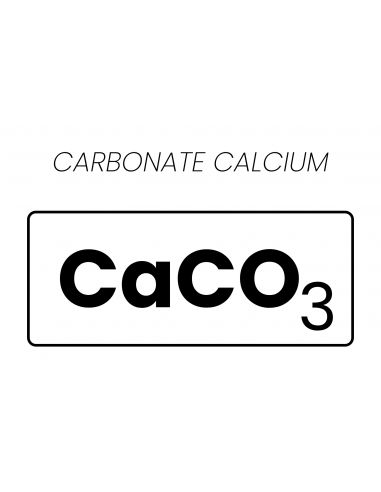
Calcium carbonate masterbatch is a mineral-filled additive used in polyethylene (PE) and polypropylene (PP) to adjust stiffness, opacity, surface characteristics, and material cost. It contains calcium carbonate (CaCO3) dispersed in a polymer carrier, allowing manufacturers to incorporate the mineral filler more conveniently than feeding loose powder directly. Final performance depends on filler loading, particle size, surface treatment, carrier compatibility, and processing conditions.
What Is Calcium Carbonate Masterbatch?
Calcium carbonate masterbatch consists of calcium carbonate particles distributed throughout a compatible polymer carrier. The carrier helps the filler enter the base resin during compounding or product manufacturing, while the masterbatch format supports controlled dosing and easier material handling.
Calcium carbonate is widely used as a mineral filler in polyolefin compounds. Depending on the formulation, it can increase stiffness, modify surface appearance, affect opacity, and reduce the amount of base polymer required per unit of compound. Good dispersion is essential because agglomerated particles can create surface defects and inconsistent mechanical properties.
Key Benefits of Calcium Carbonate Masterbatch
- Increased stiffness: Suitable formulations can increase flexural modulus and rigidity in selected PE and PP products.
- Cost management: Replacing part of the base polymer with mineral filler may reduce compound cost, depending on material prices and loading.
- Opacity and appearance: Calcium carbonate can modify opacity, whiteness, and surface characteristics, depending on particle properties and the other ingredients.
- Dimensional behavior: Mineral filling can affect shrinkage and dimensional stability, although the result depends on the resin, mold design, and processing conditions.
- Controlled dosing: A masterbatch format can simplify feeding and help maintain a consistent filler concentration.
These benefits involve trade-offs. Higher filler loading can reduce elongation and impact resistance, increase compound density, and affect melt flow. Manufacturers should evaluate the complete property profile instead of selecting a formulation based on filler percentage alone.
Applications in Polyethylene and Polypropylene
Calcium carbonate masterbatch is used in a range of polyolefin products. The appropriate grade depends on the polymer, manufacturing process, required appearance, and mechanical specifications.
- PE packaging films: Can be used to modify opacity, stiffness, and cost. Film formulations must be checked for tensile properties, elongation, tear resistance, and surface quality.
- PP injection-molded products: May increase rigidity in selected household goods, containers, and industrial components.
- Raffia and woven products: Can be incorporated into suitable PP formulations, subject to tensile, elongation, and process requirements.
- Extruded sheets and profiles: May help adjust stiffness, surface characteristics, and material cost.
- Blow-molded products: Suitability depends on the resin grade, part design, filler concentration, and required impact performance.
One masterbatch grade should not automatically be used for every application. A formulation suitable for a rigid molded part may not meet the flexibility and strength requirements of a thin film or woven product.
Processing and Dispersion Considerations
Consistent dispersion is critical when incorporating calcium carbonate into PE and PP. Poor dispersion may cause visible specks, uneven surfaces, weak points, and variation in mechanical performance. The masterbatch carrier should be compatible with the target polymer and the selected manufacturing process.
Key processing considerations include:
- Selecting a carrier resin compatible with the base PE or PP grade.
- Checking particle size distribution and surface treatment.
- Using suitable feeding, mixing, and melt-processing conditions.
- Controlling moisture and storage conditions according to supplier guidance.
- Monitoring melt flow, surface quality, and finished-product properties.
Twin-screw extrusion is commonly used in masterbatch production because it supports controlled mixing and dispersion. During downstream processing, the required equipment settings depend on the resin, filler loading, and production method. Excessive shear or unsuitable temperatures may affect the polymer or final product quality.
How Filler Loading Affects Product Performance
The calcium carbonate concentration is one of the main factors affecting compound properties. Increasing the mineral content may improve stiffness and reduce the proportion of polymer in the formulation, but it can also change density, flow behavior, impact resistance, and elongation.
| Property | Potential effect | What to verify |
|---|---|---|
| Flexural modulus | May increase | Required rigidity and part design |
| Impact resistance | May decrease at higher filler levels | Impact performance under relevant test conditions |
| Elongation | May decrease | Stretching, tensile, and tear requirements |
| Compound density | Generally increases as mineral loading rises | Finished-product weight and material consumption |
| Melt flow behavior | May change with formulation and dispersion | Processing stability and product consistency |
| Opacity | May change depending on particle characteristics and loading | Visual appearance and application requirements |
There is no universal filler percentage suitable for every product. The target loading should be established through supplier recommendations, laboratory trials, and production validation.
Compatibility with Other Polymer Additives
Calcium carbonate masterbatch may be used alongside antioxidants, UV stabilizers, processing aids, impact modifiers, and other additives when the formulation requires them. Each additive has a different primary function, and compatibility should be assessed as part of the complete compound design.
For example, a mineral-filled outdoor product may require UV protection in addition to the filler. A product that needs high impact resistance may require a different balance of filler and impact modifier. Calcium carbonate does not replace antioxidants or UV stabilizers, and adding several additives does not automatically guarantee better performance.
Manufacturers should assess dispersion, processing behavior, mechanical properties, and any relevant migration or regulatory requirements before approving a combined additive package.
Quality Control and Testing
Testing helps establish whether calcium carbonate masterbatch meets the requirements of the intended application. The test plan should reflect the final product and the relevant manufacturing process.
- Tensile testing: Evaluates strength and elongation where relevant.
- Flexural testing: Measures stiffness and resistance to bending.
- Impact testing: Checks resistance to sudden mechanical loading.
- Melt flow rate testing: Helps monitor flow behavior against the product specification.
- Dispersion assessment: Identifies agglomerates and uneven filler distribution.
- Density and ash-content testing: Helps verify compound composition and consistency.
- Visual inspection: Checks surface finish, color variation, and visible defects.
Results should be compared using consistent specimen preparation, conditioning, and test methods. Production trials are also important because laboratory measurements may not capture every issue that occurs at commercial line speeds.
Cost Efficiency and Material Optimization
Calcium carbonate masterbatch can reduce formulation costs when the price and loading of the mineral filler offset the cost of the polymer it replaces. However, the lowest-cost formulation is not necessarily the most economical overall.
Manufacturers should consider the cost per finished product, production yield, cycle stability, scrap rate, product weight, and required performance. If excessive filler loading increases rejects or causes a product to fail its specifications, the initial material savings may be lost.
In recycled polyolefin formulations, calcium carbonate may help adjust stiffness and surface characteristics, but it cannot restore degraded polymer chains or remove contaminants. Recycled feedstock quality, additive compatibility, and mechanical testing remain essential.
How AasadChimie Can Support Material Selection
Selecting a suitable calcium carbonate masterbatch requires consideration of the target polymer, filler concentration, carrier resin, processing method, and finished-product requirements. AasadChimie provides information about its industrial chemical product range to help manufacturers evaluate potential formulation options.
Explore the AasadChimie product range or contact the team to discuss product availability and technical requirements. Confirm the technical data, recommended loading, carrier compatibility, and suitability for the intended application with the supplier before production-scale use.
Conclusion
Calcium carbonate masterbatch is a versatile mineral-filled additive for polyethylene and polypropylene applications. It can help increase stiffness, modify opacity, and manage material costs when the grade and loading are selected appropriately. Successful use requires suitable dispersion, compatible carrier resin, controlled processing, and testing to ensure that cost benefits do not compromise the finished product’s mechanical or visual requirements.
Technical References
What is calcium carbonate masterbatch?
It is a concentrated mixture of calcium carbonate dispersed in a polymer carrier, used to incorporate mineral filler into PE, PP, and other compatible polymer formulations.
What are the main benefits of calcium carbonate masterbatch?
Depending on the formulation, it can increase stiffness, modify opacity and surface characteristics, simplify filler dosing, and reduce material costs.
Does calcium carbonate masterbatch improve impact resistance?
Not necessarily. Higher filler loading can reduce impact resistance and elongation. The result depends on particle properties, surface treatment, polymer grade, and formulation.
Can calcium carbonate masterbatch be used in PE and PP films?
Yes, suitable grades are used in selected film applications. The formulation should be tested for tensile strength, elongation, tear resistance, opacity, and surface quality.
How is the correct loading level determined?
Loading should be determined through supplier recommendations, laboratory testing, and production trials. There is no single percentage that works for every polymer application.
Does calcium carbonate masterbatch replace UV stabilizers or antioxidants?
No. Calcium carbonate is primarily a mineral filler. UV stabilizers and antioxidants serve different functions and may be required separately, depending on the product's processing and service conditions.