


Table of Contents
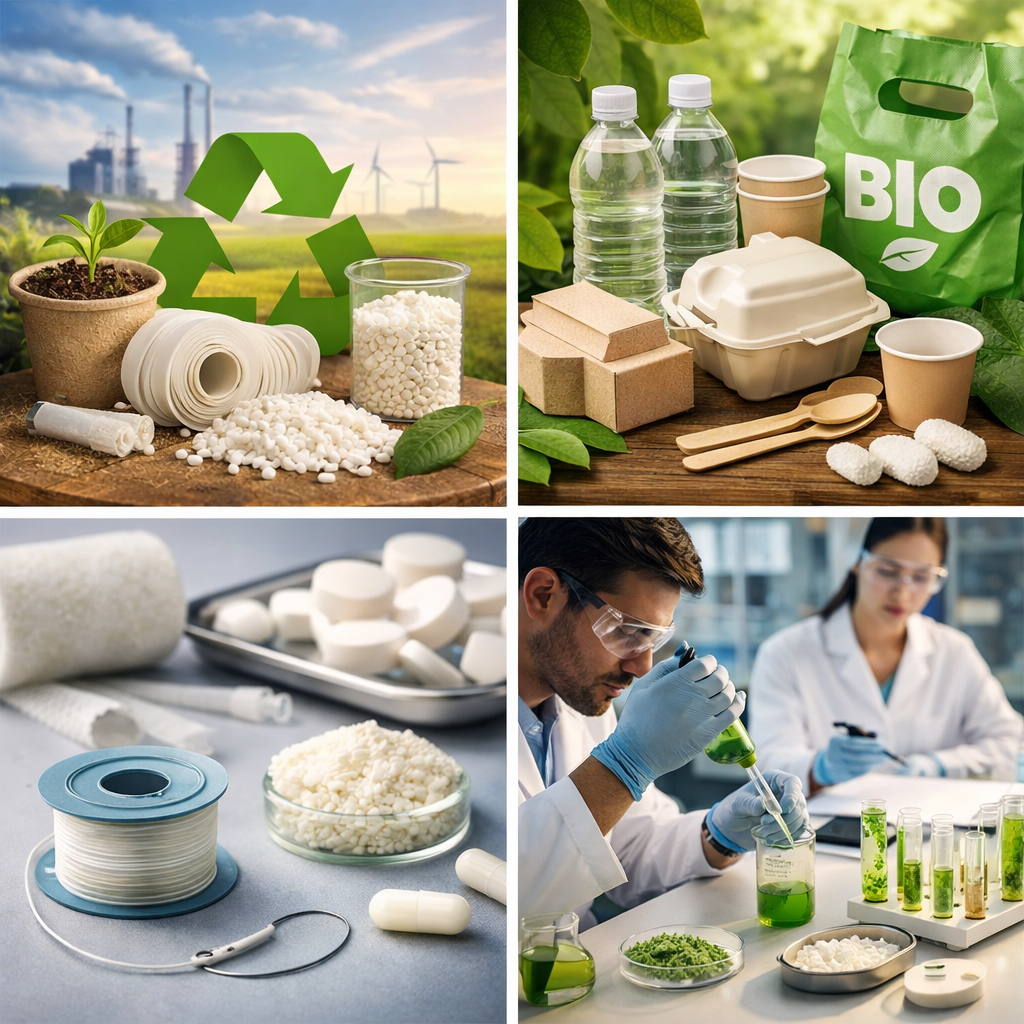
Biodegradable Polymers are transforming the materials industry by providing sustainable and eco-friendly alternatives to conventional plastics. Derived from renewable resources or designed to decompose naturally, these green polymers reduce environmental impact while maintaining high performance. Industries worldwide are adopting these sustainable polymers for packaging, coatings, medical devices, and specialty chemical applications.
Introduction to Eco-Friendly Polymers
Traditional plastics contribute to significant environmental challenges. Sustainable polymers provide a practical solution by naturally breaking down under environmental conditions. Adoption of these materials aligns with green chemistry practices, reduces landfill waste, and decreases dependence on petroleum-based plastics. Increasing consumer awareness and government regulations are accelerating adoption of renewable plastics in everyday products.
Types of Biodegradable Polymers
There are natural and synthetic biodegradable polymers. Natural polymers include polylactic acid (PLA) and polyhydroxyalkanoates (PHA), sourced from corn, sugarcane, and other renewable feedstocks. Synthetic biodegradable polymers, such as polycaprolactone (PCL), are engineered to degrade predictably while maintaining mechanical strength. Blended formulations combining natural and synthetic components are increasingly used in industrial applications. Advanced materials now integrate additives to improve thermal stability, flexibility, and resistance to moisture, expanding their usability across industries.
Production and Synthesis
Natural biodegradable polymers are derived from renewable feedstocks such as starch, cellulose, and sugars. Synthetic variants are created using controlled polymerization to achieve predictable degradation rates. Advanced production methods focus on energy efficiency, reducing waste, and improving polymer quality. Enzymatic and microbial synthesis approaches are also being explored to produce eco-friendly polymers with minimal environmental impact. Innovations in catalysis and polymer engineering have further improved scalability and economic feasibility.
Industrial Applications
Sustainable polymers are applied in multiple industries:
- Eco-friendly packaging solutions for consumer goods
- Biodegradable coatings and films for industrial use
- Medical devices, including sutures and drug delivery systems
- Agricultural mulch films that reduce plastic pollution
- Specialty components requiring controlled degradation
- Disposable items in hospitality and food service
- 3D printing filaments for environmentally conscious manufacturing
- Components in electronics where biodegradable materials reduce long-term waste
- Textile fibers for clothing and composites
These green polymers allow manufacturers to meet sustainability standards without compromising product performance. Continuous R&D helps create formulations with improved mechanical strength, thermal stability, and compatibility with other materials. Companies are now exploring biopolymer blends for hybrid applications, combining the best properties of multiple polymer types.
Environmental and Economic Benefits
Using biodegradable polymers reduces environmental footprint and ensures compliance with global regulations on plastic waste. Long-term economic benefits include lower waste management costs, enhanced brand reputation, and alignment with consumer demand for eco-friendly products. Additionally, these materials support circular economy initiatives by enabling material reuse and recycling. Companies investing in sustainable polymers also see opportunities in marketing and innovation leadership, appealing to environmentally conscious consumers and clients.
Challenges and Considerations
While advantageous, renewable plastics require careful design to ensure mechanical and thermal performance, and predictable degradation rates. Production costs are generally higher than conventional plastics, and integration with existing processes must be carefully managed. Ongoing research focuses on developing cost-effective and versatile polymer blends suitable for diverse industrial conditions. Lifecycle assessments, end-of-life management, and compliance with biodegradation standards are key factors for widespread industrial adoption.
Innovations Driving Sustainable Polymer Industry
Recent innovations include:
- Enhanced mechanical performance for industrial applications
- Controlled degradation under varied environmental conditions
- Blended polymers combining natural and synthetic materials
- Integration with industrial solvents and coatings
- Smart polymers responsive to environmental triggers
- Polymers with antimicrobial or UV-protective features
- Advanced composites combining biodegradable polymers with natural fibers
- Biopolymers for additive manufacturing and 3D printing applications
Storage and Handling Guidelines
These eco-friendly polymers should be stored in cool, dry, and ventilated areas. Protect them from sunlight, moisture, and excessive heat. Standard safety measures, including gloves and eyewear, are recommended during handling. Bulk storage should use secondary containment systems to prevent spills. Proper labeling and emergency plans improve workplace safety. Special attention is required to avoid premature degradation. Some biodegradable polymers may require temperature- or humidity-controlled environments to maintain properties over extended storage periods.
Future Outlook
The adoption of sustainable polymers is expected to increase as industries prioritize environmentally responsible materials. Advances in polymer chemistry, processing technologies, and circular economy initiatives will broaden applications and further reduce environmental impact. Integration with renewable energy-driven manufacturing and eco-design principles will make biodegradable polymers central to next-generation industrial solutions. Companies using these materials gain regulatory compliance, operational safety, and competitive market advantages.