


Table of Contents
Bio-Based Acetone is rapidly emerging as a sustainable alternative to conventional petrochemical solvents in modern chemical manufacturing. Driven by stricter environmental regulations, rising demand for green solvents, and advancements in bio-refining technologies, this renewable form of acetone is reshaping industrial production strategies worldwide.
Table of Contents
- Introduction
- What Is Bio-Based Acetone?
- Bio-Based vs Conventional Acetone
- Production Methods
- Industrial Applications
- Environmental and Economic Benefits
- Market Trends and Outlook
- Safety and Handling
- Future Prospects
- References

Introduction to Bio-Based Acetone
The global chemical industry is transitioning toward sustainable raw materials and cleaner production processes. Bio-Based Acetone plays a key role in this transition by offering identical chemical performance to conventional acetone while significantly reducing environmental impact. As manufacturers aim to lower carbon emissions and meet ESG targets, renewable solvents are becoming essential components of modern chemical supply chains.
What Is Bio-Based Acetone?
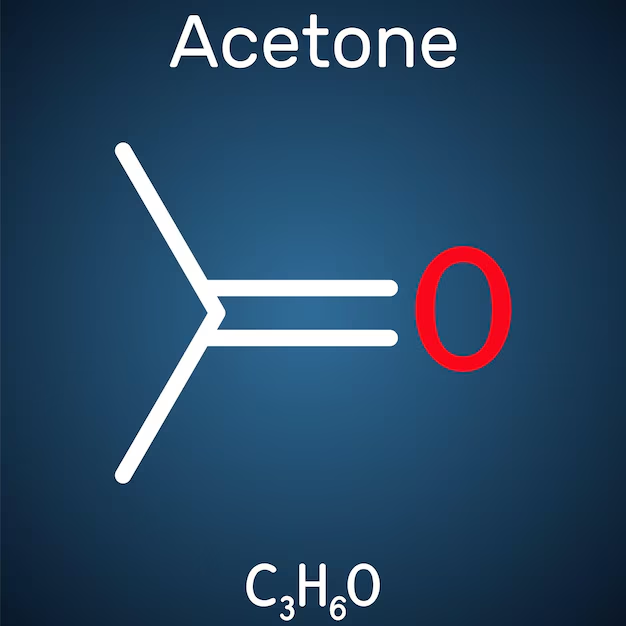
Bio-Based Acetone is chemically identical to petroleum-derived acetone, sharing the same molecular structure and solvent properties. The key difference lies in its origin. Instead of being produced from fossil-based propylene, it is derived from renewable biomass sources such as corn, sugarcane, or agricultural residues. This renewable pathway supports circular economy principles and reduces dependency on non-renewable resources.
Bio-Based vs Conventional Acetone
Although both forms deliver the same solvency strength, evaporation rate, and compatibility with industrial formulations, their environmental footprints differ significantly. Bio-based production results in lower lifecycle greenhouse gas emissions and reduced reliance on petroleum feedstocks. For companies operating under strict environmental regulations, switching to renewable solvents offers both compliance and reputational advantages without compromising process efficiency.
Production Methods
Production of Bio-Based Acetone typically involves fermentation processes in which biomass is converted into solvents using specialized microorganisms. These biochemical pathways are followed by purification and distillation stages to achieve industrial-grade purity. Continuous improvements in bio-refining technology have enhanced yields, reduced energy consumption, and improved scalability, making bio-based production increasingly competitive with conventional methods.
Advanced research also explores integrated bioprocesses where acetone is co-produced with other bio-based chemicals, improving overall economic viability. Such innovations support long-term adoption across large-scale manufacturing operations.
Industrial Applications
This renewable solvent is widely used in coatings, paints, adhesives, pharmaceuticals, and specialty chemicals. Its fast evaporation rate makes it ideal for surface coatings and cleaning applications, while its strong solvency ensures effective dissolution of resins and polymers. Industries adopting sustainable solvents benefit from reduced VOC impact while maintaining consistent product quality.
In pharmaceutical manufacturing, renewable acetone is valued for its purity and compatibility with sensitive formulations. In electronics and precision cleaning, it provides reliable performance while aligning with corporate sustainability goals.
Environmental and Economic Benefits
The environmental advantages of Bio-Based Acetone include lower carbon footprint, reduced fossil fuel dependency, and improved biodegradability across its lifecycle. From an economic perspective, renewable feedstocks offer long-term price stability compared to volatile petroleum markets. Companies integrating bio-based solvents also enhance sustainability reporting and gain competitive advantages in environmentally conscious markets.
Adopting renewable solvents can also reduce regulatory risks, especially in regions with strict VOC and emissions standards. These benefits position bio-based alternatives as strategic assets rather than simple raw material substitutions.
Market Trends and Outlook
The global market for bio-based solvents is expanding rapidly, driven by regulatory pressure and consumer demand for greener products. Bio-Based Acetone is gaining attention in Asia, Europe, and North America, where chemical manufacturers are investing heavily in sustainable production technologies. Industry analysts predict steady growth as bio-refining infrastructure continues to mature.
Strategic partnerships between chemical producers and biotechnology companies are accelerating commercialization, making renewable solvents more accessible to industrial users.
Safety, Storage, and Handling
Safety guidelines for Bio-Based Acetone are similar to those of conventional acetone. It should be stored in cool, well-ventilated areas away from ignition sources. Proper labeling, spill containment, and use of personal protective equipment ensure safe handling in industrial environments. Its renewable origin does not alter flammability characteristics, so standard solvent safety protocols remain essential.
Future Prospects
Looking ahead, Bio-Based Acetone is expected to play a growing role in sustainable chemical manufacturing. Advances in fermentation efficiency, feedstock utilization, and solvent recovery technologies will further reduce production costs. As global industries move toward low-carbon operations, renewable solvents will become standard components of industrial formulations.
For manufacturers seeking long-term sustainability without sacrificing performance, bio-based alternatives offer a practical and future-proof solution aligned with global environmental goals.