


Plastic Additives for Different Polymers
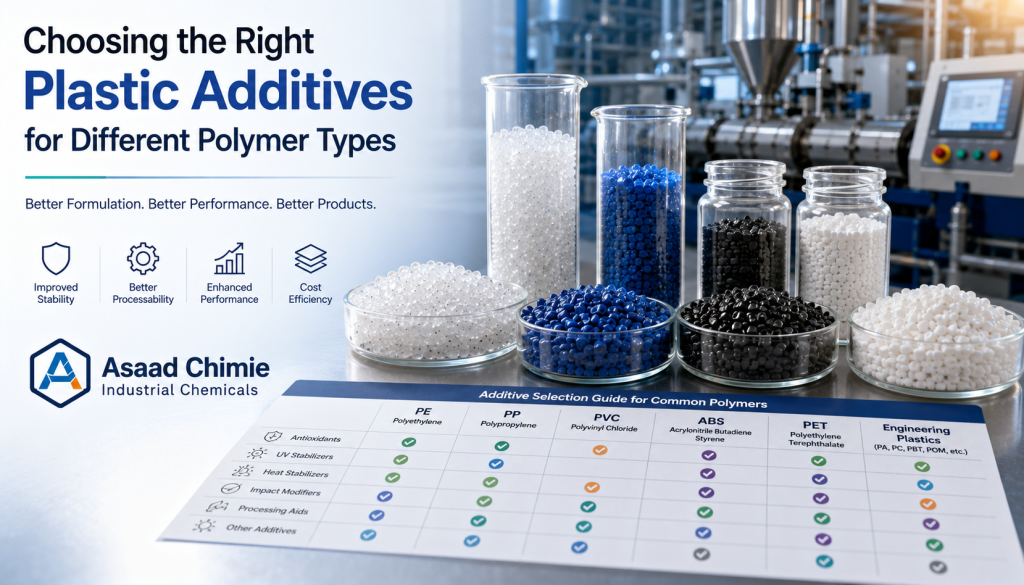
Plastic Additives for Different Polymers: Selection Guide Plastic additives improve polymer processing, stability, mechanical performance, surface quality, and service life. Choosing the right plastic additives for different polymers depends on the resin type, manufacturing process, operating environment, and final product requirements. This guide explains how manufacturers select plastic additives for polyethylene (PE), polypropylene (PP), PVC, […]
Lubricants in PVC Processing: Enhancing Efficiency and Surface Quality
Lubricants in PVC Processing play a critical role in improving melt flow behavior, reducing friction, and enhancing surface quality in both rigid and flexible PVC compounds. Polyvinyl chloride (PVC) is highly sensitive to processing conditions, and without proper lubrication, issues such as excessive torque, poor surface finish, sticking to metal surfaces, and thermal degradation may […]
PVC Stabilizers in Industrial Applications
PVC Stabilizers are essential additives used to protect polyvinyl chloride (PVC) from thermal degradation during processing and long-term use. PVC is naturally sensitive to heat and can degrade when exposed to high temperatures during extrusion, injection molding, or calendaring. Without proper stabilization, discoloration, brittleness, and loss of mechanical properties may occur. By incorporating high-quality PVC […]
Plasticizers in Polymer Compounds
Plasticizers in Polymer Compounds Modern polymer engineering requires precise control over flexibility, durability, and processing behavior. To achieve these properties, manufacturers rely on specialized additives that modify molecular interactions within polymer compounds. Among these additives, plasticizers play a key role in adjusting mechanical performance while maintaining material integrity across industrial applications. Role of Additives in […]