


Table of Contents
Corrosion remains one of the most costly and persistent challenges in industrial infrastructure, affecting pipelines, bridges, marine structures, storage tanks, and manufacturing equipment. Traditional protective coatings rely on passive barrier mechanisms, which can degrade over time and require frequent maintenance. In contrast, smart anti-corrosion coatings introduce responsive and adaptive functionalities that significantly enhance durability, reliability, and lifecycle performance in demanding industrial environments.
Understanding Smart Anti-Corrosion Coatings
Smart anti-corrosion coatings are engineered systems capable of responding to environmental stimuli such as moisture, pH changes, mechanical damage, or electrochemical activity. Unlike conventional coatings that merely isolate the substrate, these advanced materials actively detect corrosion initiation and trigger protective actions. This intelligent behavior enables early intervention, minimizing damage and extending the service life of coated structures.
These coatings integrate functional additives, microcapsules, or nanostructured components that provide self-healing, corrosion inhibition, or real-time monitoring capabilities. Their development represents a shift from reactive maintenance strategies to predictive and preventative protection models.
Key Functional Mechanisms
Self-Healing Capabilities
One of the most significant advancements in smart anti-corrosion coatings is self-healing functionality. Microcapsules or vascular networks embedded within the coating release healing agents when cracks or mechanical damage occur. These agents polymerize or react with the surrounding matrix, sealing defects before corrosive species reach the substrate.
Self-healing mechanisms reduce maintenance frequency and prevent localized corrosion, especially in hard-to-access or high-risk industrial applications such as offshore platforms and underground pipelines.
Active Corrosion Inhibition
Smart coatings can also incorporate corrosion inhibitors that are released only when specific triggers are detected, such as a drop in pH or increased ionic activity. This targeted release ensures efficient use of inhibitors while minimizing environmental impact and reducing the risk of premature depletion.
Compared to traditional inhibitor-loaded coatings, this controlled response significantly enhances long-term protection and aligns with modern environmental regulations.
Sensing and Monitoring Functions
Advanced smart anti-corrosion coatings may include sensing elements that enable real-time monitoring of coating integrity and corrosion activity. Changes in electrical resistance, color, or fluorescence can indicate early-stage degradation, allowing operators to implement maintenance strategies before structural failure occurs.
These monitoring capabilities are increasingly valuable in digital asset management systems and predictive maintenance frameworks.
Role of Nanotechnology in Smart Coatings
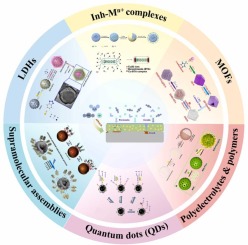
Nanotechnology plays a critical role in enhancing the performance of smart anti-corrosion coatings. Nanoparticles such as graphene, nano-silica, and layered double hydroxides improve barrier properties, mechanical strength, and chemical resistance. Their high surface area and tunable surface chemistry enable efficient interaction with both the coating matrix and corrosive agents.
Nanostructured additives also improve adhesion and reduce permeability, making coatings more resistant to moisture, oxygen, and aggressive chemicals. Research institutions and industry leaders continue to explore nanotechnology-driven solutions to optimize performance while maintaining cost-effectiveness.
Industrial Applications
Smart anti-corrosion coatings are increasingly adopted across multiple industries where asset longevity and safety are critical. In the oil and gas sector, they protect pipelines and storage facilities from aggressive environments, reducing downtime and environmental risks. Marine and offshore structures benefit from enhanced resistance to saltwater corrosion and mechanical wear.
Infrastructure projects such as bridges, rail systems, and power plants also utilize these coatings to extend service life and lower lifecycle costs. Manufacturing facilities apply smart coatings to machinery and equipment exposed to chemicals, humidity, and thermal stress.
Environmental and Economic Benefits
Beyond performance advantages, smart anti-corrosion coatings contribute to sustainability and economic efficiency. By extending maintenance intervals and reducing material replacement, they lower overall resource consumption and waste generation. Targeted inhibitor release and durable barrier systems reduce the need for frequent recoating, decreasing solvent use and emissions.
From an economic perspective, reduced downtime, lower inspection costs, and extended asset life result in substantial long-term savings. These benefits make smart coatings a strategic investment for industries managing large-scale infrastructure.
Challenges and Development Trends
Despite their advantages, challenges remain in the widespread adoption of smart anti-corrosion coatings. Manufacturing complexity, material costs, and scalability are key considerations. Ensuring long-term stability of smart components under harsh industrial conditions also requires ongoing research and validation.
Current development trends focus on improving multi-functional performance, integrating digital monitoring systems, and enhancing compatibility with existing coating application processes. Researchers are also exploring eco-friendly formulations and bio-based components to further reduce environmental impact.
Future Outlook
As industries move toward smarter, more sustainable infrastructure solutions, smart anti-corrosion coatings are expected to play a central role in asset protection strategies. Advances in materials science, nanotechnology, and digital integration will continue to enhance their effectiveness and accessibility.
With increasing regulatory pressure, rising maintenance costs, and the demand for longer-lasting infrastructure, smart anti-corrosion coatings represent a forward-looking solution that aligns performance, sustainability, and economic efficiency.
For additional technical insights and industry standards related to corrosion protection technologies, refer to resources such as
NACE International, a leading authority on corrosion science and engineering.
Smart anti-corrosion coatings are increasingly used alongside other advanced protective systems such as
nanomaterial-enhanced industrial coatings
to improve durability and surface performance in harsh environments. These smart systems complement modern
self-healing polymer technologies, offering combined protection and extended service life.
In many applications, smart anti-corrosion coatings are formulated to comply with low-emission standards and are often integrated with
waterborne resin systems
or advanced polymer matrices to reduce environmental impact while maintaining industrial-grade performance.