


Table of Contents
Polyvinyl Chloride is a versatile thermoplastic polymer widely used across various industrial sectors. Known for its durability, chemical resistance, and adaptability, this material plays an essential role in construction, packaging, electrical insulation, and medical applications. Both rigid and flexible formulations allow manufacturers to meet a wide range of performance requirements.
Introduction to PVC
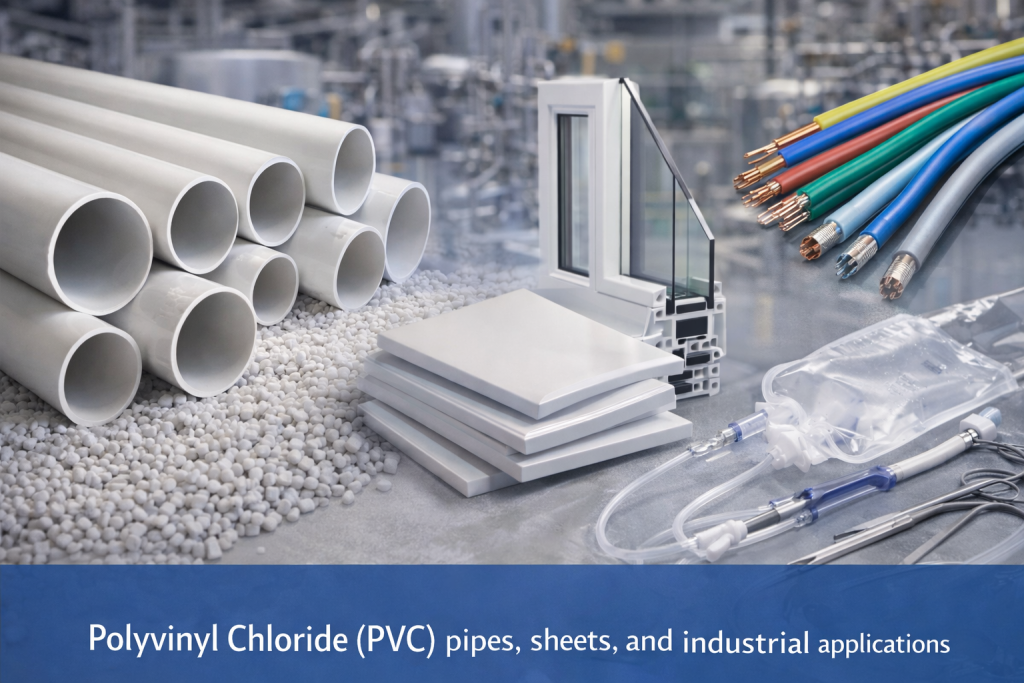
This polymer is produced by the polymerization of vinyl chloride monomer. By adding plasticizers, stabilizers, and other additives, manufacturers can create either rigid or flexible products. Rigid formulations are often used in construction for piping, window frames, and siding, whereas flexible versions are ideal for cables, flooring, and medical tubing.
The production of PVC involves precise control over polymerization conditions to achieve the desired molecular weight, particle size, and physical properties. Suspension polymerization is the most common industrial method, resulting in uniform beads suitable for extrusion and molding. Emulsion polymerization, on the other hand, is preferred for specialty applications such as coatings and adhesives where fine particle size and controlled viscosity are required. Bulk polymerization can also be used for high-purity PVC applications. By modifying the polymerization parameters and incorporating specific additives, manufacturers can tailor the thermal stability, impact resistance, and flexibility of the final product.
Chemical Structure and Properties
The chemical composition of PVC consists of repeating vinyl chloride units, which provide strength, rigidity, and resistance to environmental degradation. Its high tensile strength, thermal stability, and excellent insulation properties make it suitable for both indoor and outdoor applications. Additionally, this thermoplastic exhibits resistance to acids, bases, and oils, making it an ideal choice for harsh industrial conditions.
Processing Techniques
Various production methods, including suspension, emulsion, and bulk polymerization, allow control over particle size, molecular weight, and final properties. Suspension polymerization produces uniform particles suitable for extrusion and injection molding, while emulsion polymerization is preferred for specialty coatings and powders. The material can be shaped using extrusion, injection molding, blow molding, and calendering, depending on the desired product.
Industrial Applications of PVC
In construction, this polymer is used for pipes, fittings, window profiles, and wall panels due to its durability, corrosion resistance, and ease of installation. Its rigid form ensures long-lasting performance even in harsh outdoor environments. Flexible variants are employed in electrical insulation, medical tubing, flooring, and automotive components, offering enhanced elasticity and impact resistance.
PVC’s versatility extends to packaging, where its chemical stability and transparency are key benefits. Bottles, blister packs, and shrink films utilize this thermoplastic to ensure product safety, chemical resistance, and visual clarity. In the medical sector, flexible PVC is preferred for tubing, blood bags, and IV containers due to its biocompatibility and sterilization capabilities.
Advantages of Using PVC
The material’s low flammability, chemical resistance, and ease of processing make it a preferred choice in industrial applications. By carefully selecting additives, manufacturers can tailor flexibility, hardness, UV resistance, and fire retardancy. Its long service life and low maintenance requirements contribute to cost-effective solutions across multiple sectors.
Environmental and Safety Considerations
While PVC is durable, proper handling and disposal are necessary. Recycling methods, such as mechanical recycling and energy recovery, help reduce environmental impact. Compliance with safety standards, proper ventilation, and regulated use of additives ensures workplace safety. Flexible PVC formulations are increasingly incorporating bio-based plasticizers to support sustainability goals.
Future Trends in PVC
Research focuses on bio-based additives, improved recycling technologies, and reducing carbon footprints during production. New applications in sustainable construction, green packaging, and energy-efficient infrastructure are expanding the polymer’s industrial relevance. Continuous innovation ensures that PVC remains a cornerstone material in modern manufacturing.