


Table of Contents
- Isopropyl Alcohol Specifications and Properties
- Key Isopropyl Alcohol Uses Across Industries
- 1. Electronics and Precision Cleaning
- 2. Pharmaceutical and Laboratory Processing
- 3. Disinfectants and Healthcare Products
- 4. Paints, Coatings, and Printing Inks
- 5. Adhesives and Chemical Manufacturing
- 6. Industrial Equipment and Surface Cleaning
- Why Is Isopropyl Alcohol Used as a Solvent?
- Benefits of Using IPA in Industrial Processes
- How to Choose the Right Isopropyl Alcohol Grade
- Isopropyl Alcohol Safety and Handling
- Conclusion
- What are the main Isopropyl Alcohol Uses?
- What is the chemical formula of isopropyl alcohol?
- Why is IPA used for electronics cleaning?
- Is isopropyl alcohol suitable for pharmaceutical applications?
- What should buyers check before purchasing IPA?
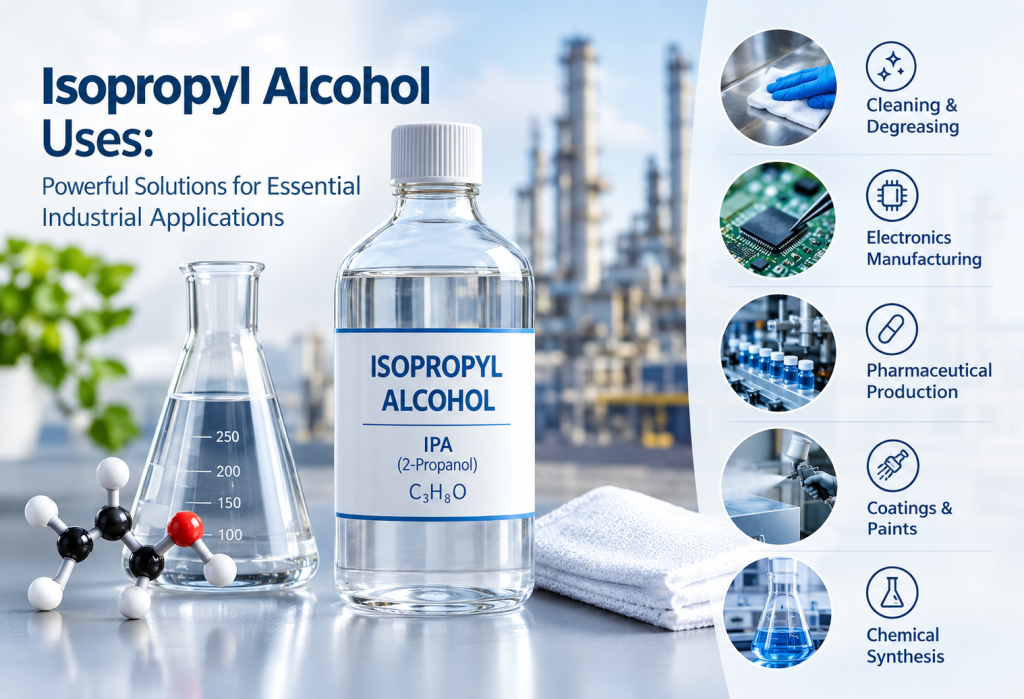
Isopropyl Alcohol Uses include electronics cleaning, pharmaceutical processing, laboratory analysis, printing, coatings, and industrial manufacturing. Isopropyl alcohol (IPA), also known as isopropanol or 2-propanol, is a colorless, volatile, and flammable liquid valued for its solvent properties and relatively rapid evaporation.
With a chemical formula of C₃H₈O and CAS number 67-63-0, isopropyl alcohol serves different purposes depending on its concentration and purity grade. Understanding the main Isopropyl Alcohol Uses helps industrial buyers select appropriate materials for cleaning, formulation, and chemical processing while meeting technical and safety requirements.
According to the PubChem chemical database, isopropanol has established solvent and chemical applications. Its suitability for any specific process depends on product specifications, material compatibility, and the required performance.
Isopropyl Alcohol Specifications and Properties
| Property | Typical Value |
|---|---|
| Chemical name | Isopropyl alcohol |
| Synonyms | IPA, isopropanol, 2-propanol |
| Chemical formula | C₃H₈O |
| CAS number | 67-63-0 |
| Molecular weight | 60.10 g/mol |
| Appearance | Clear, colorless liquid |
| Boiling point | Approximately 82.5°C at 101.3 kPa |
| Flash point | Approximately 12°C, closed cup; method-dependent |
| Density | Approximately 0.785 g/cm³ at 20°C |
| Water solubility | Miscible in all proportions |
These figures are typical reference values. Specifications may vary by grade and test method. Always confirm the supplied product’s technical data sheet (TDS) and certificate of analysis (CoA) before use.
Key Isopropyl Alcohol Uses Across Industries
The most suitable application depends on IPA purity, concentration, evaporation requirements, and compatibility with the materials being processed. The following industrial uses illustrate where isopropyl alcohol can provide practical value.
1. Electronics and Precision Cleaning
One of the most common Isopropyl Alcohol Uses is cleaning compatible electronic components and precision equipment. IPA can help remove fingerprints, light oils, and certain organic residues from surfaces.
Typical applications include:
- Cleaning compatible electronic components
- Removing fingerprints and light contamination
- Maintaining selected precision instruments
- Cleaning approved surfaces during electronics manufacturing
Electronic and semiconductor processes may require high-purity IPA with strict limits on water and other contaminants. Verify compatibility with plastics, coatings, adhesives, and sensitive components. Equipment must be handled according to manufacturer instructions, with power isolation and suitable fire precautions where required.
2. Pharmaceutical and Laboratory Processing
Pharmaceutical and laboratory operations use isopropyl alcohol as a process solvent, cleaning agent, or analytical reagent in selected applications. These Isopropyl Alcohol Uses depend on purity specifications and the requirements of the manufacturing or analytical method.
Examples include:
- Cleaning compatible manufacturing equipment
- Preparing samples for laboratory analysis
- Supporting selected extraction and formulation processes
- Cleaning designated surfaces in controlled production areas
Pharmaceutical applications require suitable grades, documented specifications, and appropriate quality controls. Industrial-grade IPA should not automatically be substituted for pharmaceutical or analytical-grade material.
3. Disinfectants and Healthcare Products
Isopropyl alcohol is used in certain antiseptic and disinfectant formulations because it can provide antimicrobial activity at appropriate concentrations. Performance depends on the formulation, contact time, target microorganism, and applicable product requirements.
Potential applications include:
- Formulated surface disinfectants
- Selected antiseptic products
- Cleaning compatible noncritical equipment surfaces
- Healthcare and hygiene formulations
Not every IPA product is approved for medical or disinfectant use. Follow the product label, applicable regulations, and validated procedures. Alcohol-based formulations must be handled away from flames, sparks, and other ignition sources.
4. Paints, Coatings, and Printing Inks
Another area involving Isopropyl Alcohol Uses is the production of selected coatings, printing inks, and solvent blends. IPA can help dissolve compatible ingredients or support specific formulation and cleaning processes.
Industrial applications may include:
- Selected printing ink formulations
- Compatible coating and surface-treatment processes
- Cleaning approved tools and equipment
- Preparing certain surfaces before finishing
Formulators should evaluate resin compatibility, drying time, substrate sensitivity, and final product performance. IPA is not a universal replacement for solvents designed specifically for every paint, coating, or printing system.
5. Adhesives and Chemical Manufacturing
In adhesive production and chemical processing, isopropyl alcohol can be used in selected formulations and cleaning operations. Depending on the process, it may help dissolve compatible ingredients, remove residues, or prepare materials for further processing.
Before introducing IPA into an adhesive or resin formulation, manufacturers should test its effect on viscosity, curing behavior, bonding strength, and compatibility with other ingredients.
For a broader comparison of solvent options, see our guide to industrial solvents.
6. Industrial Equipment and Surface Cleaning
Industrial cleaning is another important category of Isopropyl Alcohol Uses. IPA can remove certain oils, fingerprints, and organic contaminants from compatible surfaces, and its relatively rapid evaporation may reduce drying time.
However, IPA can damage some plastics, elastomers, painted surfaces, and protective coatings. Test compatibility before routine use, provide adequate ventilation, and avoid applying it near ignition sources or hot equipment.
Why Is Isopropyl Alcohol Used as a Solvent?
Understanding the properties behind Isopropyl Alcohol Uses helps manufacturers determine whether IPA meets their cleaning, formulation, or processing requirements.
- Solvency: Dissolves many oils and organic compounds, depending on their chemical structure.
- Rapid evaporation: Can dry relatively quickly under suitable conditions.
- Water miscibility: Mixes with water in all proportions.
- Formulation flexibility: Can be used in compatible solvent blends.
- Multiple grade options: Available in different purity specifications for different applications.
These properties do not guarantee that IPA will work for every process. Cleaning effectiveness and formulation performance depend on concentration, temperature, contamination, contact time, and the materials involved.
Benefits of Using IPA in Industrial Processes
When the grade and application are properly matched, Isopropyl Alcohol Uses can support efficient cleaning and manufacturing operations.
- Effective removal of certain oils and organic residues
- Relatively rapid evaporation under suitable conditions
- Compatibility with water and many organic solvent systems
- Use in selected cleaning, laboratory, and formulation processes
- Availability in grades suited to different technical requirements
Actual benefits depend on the process and must be weighed against flammability, exposure risks, material compatibility, and operating costs.
How to Choose the Right Isopropyl Alcohol Grade
For industrial Isopropyl Alcohol Uses, selecting the correct purity grade is essential for consistent performance and product quality. Buyers should evaluate the following factors before purchasing:
- Purity and concentration: Confirm the required IPA percentage and acceptable impurity levels.
- Application requirements: Determine whether industrial, electronic, pharmaceutical, or analytical-grade material is needed.
- Residue limits: Review water content and contamination requirements for precision cleaning.
- Material compatibility: Check effects on plastics, elastomers, coatings, and other substrates.
- Technical documentation: Request the TDS, safety data sheet (SDS), and CoA where applicable.
- Supply reliability: Assess batch consistency, packaging, availability, and transport arrangements.
Explore the Aasad Chimie product range for industrial chemical sourcing information. You can also contact Aasad Chimie to discuss product specifications and supply requirements.
Isopropyl Alcohol Safety and Handling
Isopropyl alcohol is a highly flammable liquid. Exposure can irritate the eyes and cause dizziness or other harmful effects, particularly at elevated concentrations. Safe handling requires adequate ventilation, control of ignition sources, compatible containers, and protective equipment appropriate to the task.
Follow the product-specific SDS, local workplace regulations, and applicable storage and transport requirements. Do not use IPA near flames, sparks, or hot surfaces. Industrial facilities should establish suitable procedures for spill response, storage, and worker exposure control.
For general principles of chemical hazard classification and communication, consult the United Nations Globally Harmonized System (GHS).
Conclusion
Isopropyl Alcohol Uses include electronics cleaning, pharmaceutical processing, laboratory analysis, disinfectant formulations, coatings, printing, adhesives, and selected industrial cleaning operations. Its solvency, water miscibility, and relatively rapid evaporation make it valuable when the product grade and application requirements are properly matched.
To make the right purchasing decision, verify the concentration, purity, compatibility, technical documentation, and safety requirements for your process. Visit Aasad Chimie products or contact our team to discuss your industrial chemical requirements.
What are the main Isopropyl Alcohol Uses?
Isopropyl alcohol is used for compatible electronics cleaning, pharmaceutical and laboratory processes, disinfectant formulations, coatings, printing, and industrial cleaning.
What is the chemical formula of isopropyl alcohol?
Its chemical formula is C₃H₈O, its molecular weight is approximately 60.10 g/mol, and its CAS number is 67-63-0.
Why is IPA used for electronics cleaning?
IPA can remove fingerprints, light oils, and certain organic residues from compatible surfaces. Sensitive applications may require high-purity grades and strict contamination controls.
Is isopropyl alcohol suitable for pharmaceutical applications?
It can be used in selected processes when the grade, purity, documentation, and manufacturing procedures meet the applicable requirements.
What should buyers check before purchasing IPA?
Buyers should verify concentration, purity, intended application, impurity limits, technical documentation, packaging, supplier reliability, and safety requirements.