


Table of Contents
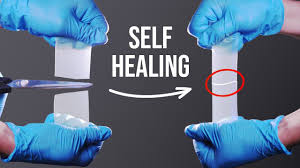
Self-healing polymers are an emerging class of smart materials designed to autonomously repair damage, cracks, or scratches without human intervention. These innovative materials combine traditional polymer properties with dynamic chemical or physical mechanisms that restore structural integrity. Their adoption in industrial applications promises to reduce maintenance costs, enhance durability, and extend the lifespan of critical components.
Introduction to Self-Healing Polymers
Self-healing polymers leverage microcapsules, reversible covalent bonds, supramolecular interactions, or shape-memory mechanisms to recover from mechanical or chemical damage. When a crack forms, embedded healing agents are released, or molecular rearrangements occur, enabling the polymer to restore continuity. This technology draws inspiration from biological systems, such as human skin or plant tissues, that naturally repair damage.
Mechanisms of Self-Healing
Microcapsule-Based Systems
Microcapsules containing monomers or catalysts are dispersed in the polymer matrix. Upon crack formation, these capsules rupture, releasing the healing agent that reacts with the surrounding polymer to seal the damage. This method is effective in coatings, adhesives, and composites.
Reversible Covalent Bonding
Polymers with dynamic covalent bonds, such as Diels–Alder linkages, can reversibly break and reform under thermal or chemical stimuli. This approach allows multiple self-healing cycles, making it suitable for high-performance industrial applications.
Supramolecular Polymers
Supramolecular interactions, including hydrogen bonding, metal–ligand coordination, and π–π stacking, enable reversible assembly of polymer chains. These interactions allow healing at ambient conditions without external energy input.
Industrial Applications
Self-healing polymers are increasingly adopted in industries that demand high durability and reliability:
- Automotive: scratch-resistant coatings, structural adhesives, and interior components
- Aerospace: lightweight composites with autonomous damage repair capabilities
- Electronics: protective coatings on circuit boards and flexible displays
- Construction: crack-healing coatings for concrete and protective wall layers
- Packaging: polymer films that restore barrier properties after minor punctures
Advantages of Self-Healing Polymers
The primary benefits include extended material lifetime, reduced maintenance and replacement costs, improved safety, and environmental sustainability. By minimizing the need for repairs and reducing material waste, self-healing polymers contribute to more sustainable industrial operations. Additionally, they offer unique functional properties, such as autonomous crack closure, chemical resistance recovery, and improved mechanical stability.
Challenges and Considerations
Despite the advantages, challenges remain in scaling up self-healing polymers for commercial use. These include optimizing healing efficiency, cost of raw materials, compatibility with existing manufacturing processes, and long-term durability under industrial conditions. Research is focused on enhancing multi-cycle healing, integrating bio-based components, and developing cost-effective manufacturing techniques.
Future Trends
Despite the advantages, challenges remain in scaling up self-healing polymers for commercial use. These include optimizing healing efficiency, cost of raw materials, compatibility with existing manufacturing processes, and long-term durability under industrial conditions. Research is focused on enhancing multi-cycle healing, integrating bio-based components, and developing cost-effective manufacturing techniques.
One major challenge is ensuring consistent healing performance over multiple damage cycles. Many current self-healing systems can only repair a single crack or minor damage before their efficiency declines. Developing polymers with repeatable healing mechanisms, whether through reversible covalent bonds, supramolecular interactions, or microcapsule networks, is essential for industrial adoption. Additionally, the healing process must occur under real-world conditions, which can vary widely in temperature, humidity, and mechanical stress. For example, coatings used in automotive or aerospace applications must perform reliably under extreme heat, cold, and UV exposure, which requires polymers with both robust self-healing capability and environmental resistance.
Another area of focus is integrating bio-based or renewable feedstocks into self-healing polymers. Conventional synthetic monomers may be expensive, energy-intensive to produce, or environmentally harmful. By incorporating natural oils, sugars, or plant-derived monomers, researchers aim to reduce the carbon footprint while maintaining or improving material properties. This approach not only supports sustainable manufacturing but also aligns with global trends toward green chemistry and regulatory compliance.
Cost reduction and scalability are also critical for commercial viability. While laboratory-scale formulations can demonstrate impressive healing, transitioning to large-scale production requires careful optimization of synthesis, polymer processing, and additive incorporation. Advanced extrusion, casting, or coating techniques must be adapted to handle dynamic polymers without compromising their healing potential. Companies are exploring continuous manufacturing methods, solvent-free processing, and additive technologies to achieve economically feasible production.
Furthermore, integrating self-healing polymers with sensors and smart systems opens opportunities for predictive maintenance. By combining polymers with microelectronics or colorimetric indicators, minor damage can be detected and repaired automatically before it propagates. This approach is particularly valuable in critical industries such as aerospace, electronics, and energy infrastructure, where failure can have severe consequences. Research in this direction emphasizes multifunctional materials that not only heal themselves but also monitor structural integrity in real-time.
Finally, interdisciplinary collaboration between chemists, materials scientists, and industrial engineers is key to overcoming these challenges. By combining expertise in polymer chemistry, mechanical engineering, and process optimization, it is possible to develop self-healing polymers that are practical, durable, and commercially viable. As innovations continue, we can expect the next generation of smart, autonomous materials to redefine maintenance practices and extend the service life of industrial products.