


Table of Contents
- Formic Acid: Quick Chemical Specifications
- What Is Formic Acid?
- Major Industrial Applications
- 1. Leather Processing
- 2. Textile Dyeing and Finishing
- 3. Rubber Manufacturing
- 4. Chemical Manufacturing
- 5. Industrial Cleaning and pH Adjustment
- How to Select the Right Industrial Grade
- Safety, Storage, and Handling
- Conclusion
- References
- What is formic acid mainly used for?
- Is formic acid soluble in water?
- What is the difference between formic acid grades?
- Is formic acid hazardous?
- How should industrial buyers choose a suitable product?
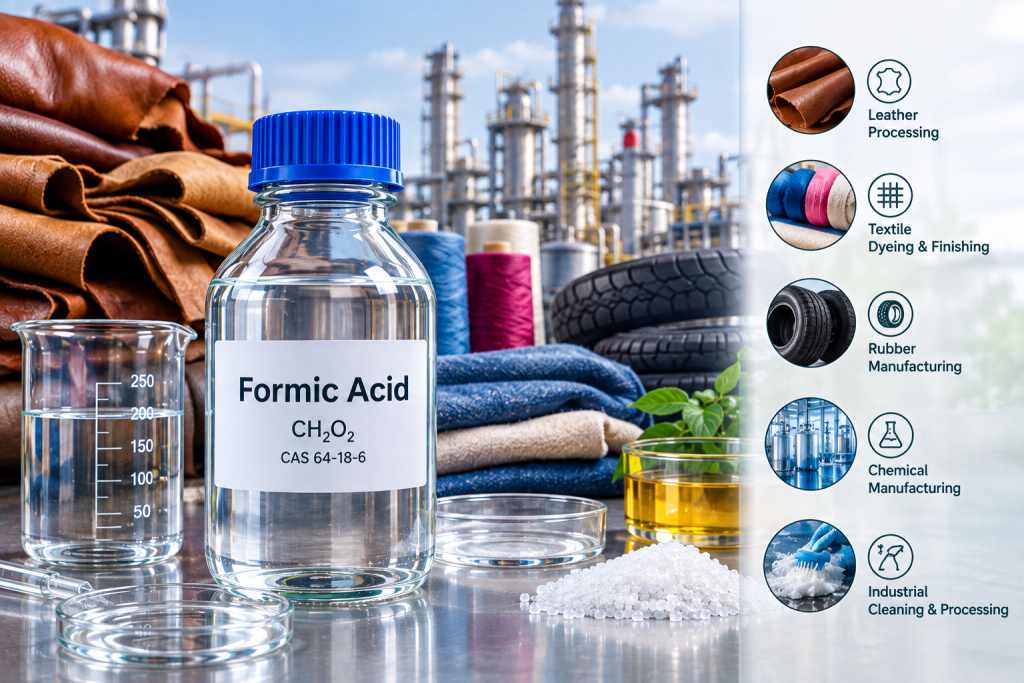
Formic Acid is an important organic acid used in leather processing, textile dyeing, rubber manufacturing, chemical synthesis, and selected industrial cleaning operations. Its acidity, water miscibility, and chemical reactivity make it useful in processes that require controlled chemical treatment. Choosing the right concentration and grade depends on the application, process conditions, and required quality standards.
Formic Acid: Quick Chemical Specifications
| Property | Typical Value |
|---|---|
| Chemical name | Formic acid |
| Synonyms | Methanoic acid |
| Molecular formula | CH₂O₂ (HCOOH) |
| CAS number | 64-18-6 |
| EC number | 200-579-1 |
| Molecular weight | 46.03 g/mol |
| Appearance | Clear, colorless liquid |
| Melting point | Approximately 8.4°C for pure material |
| Boiling point | Approximately 100.8°C at atmospheric pressure |
| Density | Approximately 1.22 g/cm³ near 20°C for pure material |
| Water solubility | Miscible |
| Commercial grades | Available in different concentrations and specifications |
These values are approximate reference data for pure formic acid and may differ from those of commercial aqueous solutions. Confirm concentration, density, and other specifications using the supplier’s technical data sheet (TDS) and certificate of analysis (CoA). PubChem’s chemical record provides additional information on chemical identity and properties.
What Is Formic Acid?
Formic acid, also known as methanoic acid, is the simplest member of the carboxylic acid family. It occurs naturally in some organisms and can also be manufactured for commercial and industrial use. Its acidic behavior makes it suitable for adjusting pH, supporting selected chemical reactions, and treating materials during manufacturing.
Commercial products are supplied at different concentrations. The appropriate specification depends on the process and the required level of chemical purity. Concentrated material requires careful handling because it can cause serious chemical burns.
Major Industrial Applications
1. Leather Processing
One established application is leather manufacturing. Formic acid can be used during pickling, tanning, and other treatment stages where controlled acidity is required. Appropriate pH conditions help manufacturers manage chemical penetration and treatment consistency.
The required dosage depends on the hide characteristics, process sequence, formulation, and equipment. Leather producers should follow validated operating procedures to achieve consistent results while avoiding excessive acid addition or damage to the material.
2. Textile Dyeing and Finishing
Textile manufacturers use this organic acid in selected dyeing and finishing processes to adjust pH and maintain suitable conditions for particular dyes and treatments. Process control can influence color consistency, dye performance, and the quality of the finished fabric.
Concentration and dosage should be selected according to fiber type, dye chemistry, bath composition, and equipment requirements. Trials at the intended operating conditions can help manufacturers establish a reliable treatment procedure.
3. Rubber Manufacturing
The rubber industry uses formic acid in certain processing operations, including the coagulation of natural rubber latex. Acid addition helps destabilize the latex under controlled conditions, allowing rubber particles to separate from the liquid phase.
Concentration, addition rate, mixing, and process conditions influence coagulation performance. Manufacturers should follow established process specifications to reduce material losses and maintain consistent raw material quality.
4. Chemical Manufacturing
In chemical manufacturing, the acid can serve as a reactant, reducing agent, or processing component in selected reactions. Its role varies according to the synthesis route and the desired intermediate or final product.
Buyers should evaluate purity, concentration, impurity limits, and compatibility with the reaction system. A suitable grade can help maintain predictable process performance, but the final specification must be determined by the chemical manufacturer’s requirements.
5. Industrial Cleaning and pH Adjustment
Selected industrial formulations use formic acid for descaling, deposit removal, or pH adjustment. Its acidic properties allow it to react with certain mineral deposits and alkaline residues. However, performance depends on the type of deposit, formulation, contact time, and operating temperature.
Before using it in cleaning operations, facilities should test compatibility with metals, seals, coatings, and other equipment materials. Cleaning procedures must also account for corrosion risks, ventilation, waste management, and worker protection.
How to Select the Right Industrial Grade
Choosing a suitable product requires matching its concentration and quality parameters to the intended application. Buyers should consider the following factors before placing an order:
- Concentration: Confirm the required percentage and whether the process needs a concentrated product or a diluted solution.
- Purity and impurities: Check the assay and limits for impurities that could affect process performance.
- Application compatibility: Confirm suitability for leather treatment, textile processing, rubber coagulation, or chemical synthesis.
- Documentation: Request a current TDS, safety data sheet (SDS), and batch-specific CoA.
- Packaging and logistics: Verify container compatibility, order volume, transport conditions, and storage requirements.
Industrial buyers can review the Aasad Chimie product range and contact the team with their required concentration, quantity, delivery destination, and documentation needs.
Safety, Storage, and Handling
Formic acid is corrosive and can cause serious skin burns and eye damage. Exposure to vapors or mist may also harm the respiratory system. Appropriate workplace controls are therefore essential, especially when handling concentrated grades or transferring the chemical in bulk.
- Use suitable ventilation and closed-transfer systems where practical.
- Wear chemical-resistant gloves, protective clothing, and eye or face protection selected according to the SDS and risk assessment.
- Use compatible containers and equipment, and keep packaging securely closed when not in use.
- Separate the material from incompatible chemicals and follow supplier guidance for storage.
- Prepare spill-response procedures and train personnel in safe handling and emergency measures.
Consult the current product SDS and applicable workplace regulations before use. Further chemical identity and hazard information can be reviewed through PubChem.
Conclusion
Formic Acid is used in leather processing, textile dyeing, natural rubber coagulation, chemical manufacturing, and selected cleaning operations. Its usefulness comes from its acidic properties and chemical reactivity, while successful industrial application depends on concentration, process control, and compatibility with the materials being treated.
Before purchasing, verify the technical specification, quality documentation, packaging, and safety requirements for the intended process. For industrial chemical sourcing inquiries, visit the Aasad Chimie products page or contact the team to discuss your requirements.
References
What is formic acid mainly used for?
Formic acid is used in leather processing, textile dyeing, natural rubber coagulation, chemical manufacturing, and selected industrial cleaning applications. Its main function varies by process, from adjusting acidity to supporting chemical reactions or latex coagulation.
Is formic acid soluble in water?
Yes. Formic acid is miscible with water, meaning it can mix with water in all proportions. However, dilution procedures must account for heat generation and corrosive hazards. Always follow the supplier's safety instructions when preparing solutions.
What is the difference between formic acid grades?
Commercial grades can differ in concentration, purity, and impurity limits. A grade suitable for one industrial process may not meet another application's requirements. Buyers should confirm the concentration, technical specification, and certificate of analysis before ordering.
Is formic acid hazardous?
Yes. It is corrosive and can cause serious skin burns and eye damage. Vapors or mists may also present inhalation hazards. Proper ventilation, suitable protective equipment, compatible storage containers, and compliance with the product SDS are essential.
How should industrial buyers choose a suitable product?
Buyers should consider the intended application, required concentration, purity, impurity limits, packaging, and delivery requirements. They should request a current SDS and technical documentation and confirm that the material is compatible with their process and equipment.