


Table of Contents
- Methylal Specifications and Physical Properties
- What Are the Main Methylal Uses in Industry?
- 1. Methylal Uses in Solvent Formulations
- 2. Adhesives and Coatings
- 3. Chemical Manufacturing and Organic Synthesis
- 4. Specialty Formulations and Processing
- Why Does Methylal’s Low Boiling Point Matter?
- Methylal vs. Other Industrial Solvents
- How to Select the Right Methylal Grade
- Methylal Safety, Storage, and Handling
- Conclusion
- What is methylal used for?
- What is the chemical formula of methylal?
- Why is methylal considered a volatile solvent?
- Is methylal suitable for all adhesives and coatings?
- How should methylal be stored safely?
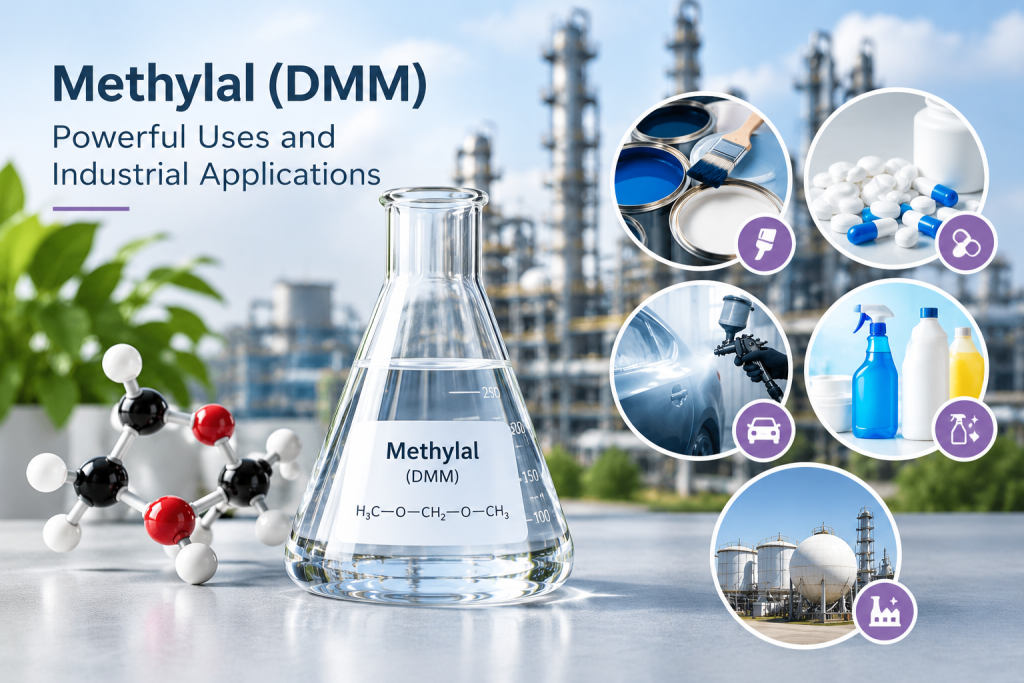
Methylal uses include selected solvent formulations, adhesive and coating production, and specialty chemical manufacturing. Also known as dimethoxymethane or dimethyl formal (DMM), methylal is a highly volatile organic liquid valued for its low boiling point and ability to dissolve certain organic compounds.
Manufacturers use methylal where its evaporation behavior and chemical compatibility meet process requirements. Selecting the appropriate grade requires attention to purity, moisture content, formulation compatibility, and safe handling conditions.
Methylal Specifications and Physical Properties
| Property | Typical Value |
|---|---|
| Chemical Name | Methylal |
| Synonyms | Dimethoxymethane, Dimethyl Formal, DMM |
| Chemical Formula | C₃H₈O₂ |
| CAS Number | 109-87-5 |
| EC Number | 203-714-2 |
| Molecular Weight | 76.10 g/mol |
| Appearance | Clear, colorless liquid |
| Melting Point | Approximately −105°C |
| Boiling Point | Approximately 42–43°C at atmospheric pressure |
| Flash Point | Approximately −18°C; test method may vary |
| Density | Approximately 0.86 g/cm³ at 20°C |
| Viscosity | Low; verify the value against the supplier’s TDS |
| Water Solubility | Soluble to a limited extent; confirm application-specific data |
Values are approximate reference data and may vary by source, measurement method, and product grade. Before production use, verify specifications against the supplier’s Technical Data Sheet (TDS) and Certificate of Analysis (CoA).
What Are the Main Methylal Uses in Industry?
The principal methylal uses relate to its high volatility and solvent properties. Depending on the formulation, it may function as a solvent, processing component, or chemical intermediate. Its low boiling point can support rapid solvent removal, but the same property requires careful control of vapor emissions and ignition risks.
1. Methylal Uses in Solvent Formulations
Methylal can serve as a solvent in selected industrial formulations that require compatibility with particular organic ingredients. Its relatively low boiling point makes it relevant to processes where rapid evaporation is desirable.
However, solvent performance depends on the substances being dissolved, the required drying profile, and the properties of the finished formulation. Manufacturers should test methylal against alternative solvents before introducing it into an established production process.
2. Adhesives and Coatings
One documented application of dimethoxymethane is its use as a solvent in selected adhesive and coating systems. It can help dissolve compatible components and contribute to the formulation’s evaporation behavior.
These methylal uses are application-specific rather than universal. Formulators need to assess resin compatibility, surface adhesion, drying time, storage stability, and any applicable volatile organic compound (VOC) requirements. Testing is particularly important when changing the solvent composition of an existing product.
3. Chemical Manufacturing and Organic Synthesis
Methylal is also relevant to specialty chemical manufacturing and selected organic synthesis processes. Its chemical structure makes it useful in applications involving acetal chemistry, while its volatility can be advantageous in processes that require solvent removal.
The exact role of DMM depends on the reaction pathway and operating conditions. Manufacturers should rely on validated process specifications and technical documentation rather than assuming that methylal is suitable for every chemical reaction or intermediate.
4. Specialty Formulations and Processing
Some specialty formulations may evaluate methylal as a processing solvent when its solvency and evaporation profile fit the application. Potential suitability depends on the materials involved, product performance targets, and requirements for residual solvent.
Before selecting methylal for resin or polymer-related processing, verify compatibility through laboratory testing. Not all polymers, elastomers, adhesives, or surface coatings tolerate the same solvents, and an unsuitable choice may affect product quality.
Why Does Methylal’s Low Boiling Point Matter?
Methylal boils at approximately 42–43°C under atmospheric pressure. This relatively low boiling point allows it to evaporate readily under many operating conditions, which can help reduce solvent-removal time in suitable formulations.
Rapid evaporation can also shorten working time, change coating behavior, and increase vapor concentrations. Process engineers should therefore consider ventilation, solvent recovery, fire protection, and the desired drying profile when assessing methylal for industrial use.
Methylal vs. Other Industrial Solvents
Methylal should be compared with alternative solvents according to their actual technical properties rather than volatility alone. Different solvents vary in solvency, water compatibility, boiling point, material compatibility, occupational hazards, and regulatory status.
When comparing DMM with alternatives, manufacturers should evaluate:
- Solvent power: Confirm that the solvent dissolves the required ingredients.
- Evaporation rate: Match drying speed to the production process.
- Material compatibility: Test the solvent with resins, substrates, seals, and packaging.
- Quality requirements: Review purity, moisture limits, and other relevant specifications.
- Safety and compliance: Assess flammability, vapor exposure, emissions, and local requirements.
A controlled laboratory trial can help establish whether methylal offers a meaningful technical advantage over an alternative solvent.
How to Select the Right Methylal Grade
Choosing the correct grade is important for consistent manufacturing results. Buyers should match the material specification to the intended application and review the following factors before ordering:
- Purity: Confirm that the grade meets the formulation or process specification.
- Moisture content: Check water limits where moisture can affect reaction performance or product stability.
- Batch consistency: Request a current CoA and review critical quality parameters.
- Packaging: Use compatible, tightly sealed packaging suitable for highly flammable liquids.
- Documentation: Obtain the TDS and Safety Data Sheet (SDS) before use.
For information about available industrial chemicals, visit the Aasad Chimie products page. To discuss specifications, availability, or sourcing requirements, contact the Aasad Chimie team.
Methylal Safety, Storage, and Handling
Methylal is highly flammable and volatile. Its vapors can form ignitable mixtures with air, so storage and handling areas must be designed to control ignition sources and vapor accumulation.
Keep containers tightly closed and away from heat, sparks, and open flames. Provide suitable ventilation, follow the supplier’s SDS, and select personal protective equipment based on the task and exposure assessment. Industrial facilities should also establish appropriate procedures for spills, fire response, and waste management.
Because methylal evaporates readily, workers should avoid breathing concentrated vapors and prevent unnecessary contact with skin and eyes. Always follow the applicable workplace regulations and product-specific safety instructions.
Conclusion
Methylal uses include selected solvent formulations, adhesives and coatings, specialty chemical manufacturing, and organic synthesis. Its low boiling point and high volatility can benefit processes that require rapid solvent removal, but the right application depends on chemical compatibility, grade specifications, and process conditions.
For reliable results, verify technical data, test the solvent in the intended formulation, and follow appropriate storage and handling procedures. For further chemical reference information, consult the PubChem profile for dimethoxymethane and review the supplier’s current technical and safety documentation.
What is methylal used for?
Methylal is used in selected solvent formulations, adhesive and coating systems, specialty chemical manufacturing, and organic synthesis. Its suitability depends on the required solvency and evaporation profile.
What is the chemical formula of methylal?
Methylal, also called dimethoxymethane or DMM, has the chemical formula C₃H₈O₂ and a molecular weight of approximately 76.10 g/mol.
Why is methylal considered a volatile solvent?
Methylal has a boiling point of approximately 42–43°C at atmospheric pressure. It evaporates readily, which can be useful in suitable industrial processes but also requires careful vapor and fire-risk management.
Is methylal suitable for all adhesives and coatings?
No. Compatibility depends on the resin, formulation ingredients, substrate, and required product properties. Manufacturers should test the solvent in the intended formulation before commercial use.
How should methylal be stored safely?
Store methylal in compatible, tightly closed containers away from heat, sparks, and open flames. Provide suitable ventilation and follow the supplier's SDS and applicable workplace safety requirements.