


Table of Contents
- What Are Plastic Additives?
- Types of Plastic Additives and Their Functions
- Antioxidants for Plastic Manufacturing
- UV Stabilizers for Plastic Additives Formulations
- Impact Modifiers and Plastic Toughness
- Plastic Additives in Polypropylene Applications
- Fillers and Their Role in Plastic Compounding
- Benefits of Plastic Additives
- How to Choose the Right Plastic Additives
- Plastic Additives Across Industrial Applications
- Quality Control and Testing
- Frequently Asked Questions
- What are Plastic Additives used for?
- Which additives are commonly used in polypropylene?
- Can plastic additives improve product durability?
- Are fillers and additives the same?
- How do manufacturers select plastic additives?
- Conclusion
- What are Plastic Additives used for?
- Which additives are commonly used in polypropylene?
- Can plastic additives improve product durability?
- Are fillers and plastic additives the same?
- How should manufacturers choose plastic additives?
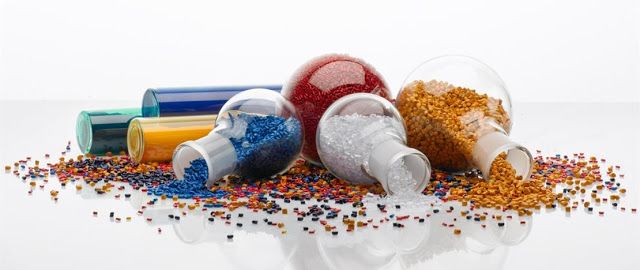
Plastic Additives are materials incorporated into polymers to improve processing, durability, appearance, and application-specific performance. Depending on their function, these additives can help protect plastics from oxidation, improve impact resistance, increase flexibility, reduce degradation caused by ultraviolet radiation, or modify other material properties.
Plastic additives are used in automotive components, packaging, electrical equipment, construction materials, and consumer products. Choosing the right additive system depends on the base polymer, manufacturing process, operating environment, and performance requirements of the finished product.
What Are Plastic Additives?
Plastic additives are chemical substances or materials blended with a polymer during compounding or manufacturing. They allow manufacturers to modify specific properties without necessarily changing the base resin.
For example, polypropylene used in an outdoor application may need UV stabilization, while a polymer exposed to elevated processing temperatures may require antioxidants. The appropriate formulation depends on the polymer grade, processing conditions, and expected service life.
Types of Plastic Additives and Their Functions
Different types of plastic additives address different performance requirements. Understanding their functions helps manufacturers develop formulations suited to particular industrial applications.
| Additive Type | Main Function | Typical Applications |
|---|---|---|
| Antioxidants | Help limit oxidation and thermal degradation | Polypropylene, polyethylene, polymer compounding |
| UV Stabilizers | Reduce degradation associated with ultraviolet exposure | Outdoor products, pipes, agricultural films |
| Impact Modifiers | Improve impact resistance and toughness in suitable formulations | Automotive parts, housings, molded products |
| Plasticizers | Increase flexibility and reduce stiffness in compatible polymers | Flexible PVC, cables, flooring |
| Flame Retardants | Improve fire performance in tested formulations | Electrical components, construction products |
| Processing Aids | Improve selected processing characteristics | Film extrusion, pipe extrusion, polymer conversion |
| Fillers | Modify stiffness, dimensional stability, density, or cost | Automotive parts, construction, molded components |
| Pigments and Colorants | Provide color and visual consistency | Packaging, consumer goods, industrial products |
Antioxidants for Plastic Manufacturing
Antioxidants help protect susceptible polymers against oxidation caused by heat and oxygen during processing and, where appropriate, throughout their service life. Oxidation can damage polymer chains and affect color, melt flow, strength, and long-term performance.
Primary antioxidants, including hindered phenolic compounds, can interrupt free-radical reactions. Secondary antioxidants, such as certain phosphites, help decompose hydroperoxides. These mechanisms may be combined to provide complementary stabilization in suitable formulations.
Learn more about antioxidants for plastics and their role in polymer processing.
UV Stabilizers for Plastic Additives Formulations
Ultraviolet radiation can contribute to discoloration, embrittlement, cracking, and loss of mechanical properties in susceptible polymers. UV stabilizers are therefore important for many products exposed to sunlight over extended periods.
Outdoor automotive components, agricultural films, construction products, pipes, and outdoor consumer goods may require suitable UV protection. The formulation depends on polymer chemistry, product color, exposure intensity, climate, and expected service life.
UV stabilizers do not replace antioxidants in every application. Where both heat-related oxidation and UV exposure are concerns, a compatible stabilization system may be needed.
Impact Modifiers and Plastic Toughness
Impact modifiers are used when a polymer needs greater toughness or improved resistance to sudden mechanical loads. They can be particularly useful when the base resin does not meet the impact requirements of the finished product.
In polypropylene compounds, impact modifiers may be combined with fillers and other additives to balance toughness, stiffness, and processing behavior. The result depends on modifier chemistry, loading level, dispersion, and the base polymer grade.
Explore polypropylene impact modifiers and polypropylene compounds for related technical information.
Plastic Additives in Polypropylene Applications
Polypropylene is widely used in packaging, automotive parts, household products, appliances, fibers, and industrial components. Depending on the end use, polypropylene formulations may include antioxidants, UV stabilizers, impact modifiers, processing aids, pigments, and mineral fillers.
For example, talc can increase stiffness and influence dimensional stability, while selected impact modifiers can improve toughness. Antioxidants help limit oxidation during processing, and UV stabilizers can reduce damage from outdoor exposure.
These additive combinations allow manufacturers to tailor polypropylene compounds to specific requirements. However, the compatibility and loading level of each ingredient must be evaluated as part of the complete formulation.
Fillers and Their Role in Plastic Compounding
Fillers are incorporated into polymers to modify properties such as stiffness, density, dimensional stability, and material cost. Talc and calcium carbonate are common examples in plastic compounding.
Filler particle size, surface treatment, loading level, and dispersion can influence mechanical performance, surface appearance, shrinkage, and processing behavior. A filler that improves stiffness may also reduce impact performance at certain loading levels, so the formulation must be tested against the intended application.
Read our related guides on talc fillers in polypropylene compounds and calcium carbonate fillers in plastics.
Benefits of Plastic Additives
The main benefit of Plastic Additives is the ability to customize polymer performance for specific manufacturing and service conditions. A properly designed additive package may help manufacturers:
- Improve resistance to thermal and oxidative degradation.
- Reduce damage caused by ultraviolet exposure.
- Adjust impact strength, flexibility, or stiffness.
- Improve selected processing characteristics.
- Modify color, surface appearance, or dimensional stability.
- Develop polymer compounds suited to specialized industrial requirements.
These benefits depend on correct additive selection and formulation. Excessive loading or incompatibility can negatively affect mechanical properties, surface quality, processing, or long-term performance.
How to Choose the Right Plastic Additives
Selecting the right additive system requires evaluating the polymer and its intended application. Important factors include processing temperature, residence time, UV exposure, mechanical loads, chemical contact, moisture, operating temperature, and expected product lifetime.
Manufacturers should also assess additive compatibility, dispersion, regulatory restrictions, and possible interactions between ingredients. Supplier technical data sheets and safety data sheets provide important information about recommended use, handling, and limitations.
Laboratory trials and production testing should confirm that the selected formulation meets the required performance criteria. A formulation developed for one polymer grade or application should not automatically be assumed suitable for another.
Plastic Additives Across Industrial Applications
Plastic additives are used across automotive manufacturing, packaging, electrical and electronics, construction, agriculture, appliances, and consumer products.
In automotive components, additive systems may support impact performance, thermal stability, weathering resistance, and dimensional requirements. In packaging, they can influence flexibility, color, processing behavior, and stability. Construction products may require specific combinations to meet durability, weathering, or fire-performance requirements.
The correct additive package should be selected according to the finished product’s technical specifications and relevant regulatory standards rather than applying a universal formulation.
Quality Control and Testing
Testing helps determine whether an additive system performs as intended. Depending on the application, manufacturers may evaluate tensile strength, impact resistance, melt flow rate, thermal stability, density, color change, UV aging, and dimensional stability.
Testing should reflect the intended service conditions wherever possible. For example, outdoor products may require weathering evaluation, while processing-sensitive formulations may need thermal stability and melt-flow assessments.
Relevant testing methods and technical standards can be explored through ISO standards. The applicable method should be selected according to the material, product, and performance requirement.
Frequently Asked Questions
What are Plastic Additives used for?
Plastic Additives are used to modify polymer properties such as thermal stability, UV resistance, flexibility, impact performance, color, and processing behavior.
Which additives are commonly used in polypropylene?
Common options include antioxidants, UV stabilizers, impact modifiers, processing aids, pigments, and mineral fillers. The appropriate combination depends on the grade and intended application.
Can plastic additives improve product durability?
Suitable additives can help slow certain degradation mechanisms or improve selected mechanical properties. Actual results depend on formulation, processing, exposure conditions, and testing.
Are fillers and additives the same?
Fillers are one category of materials used in polymer formulations. They often modify stiffness, density, dimensional stability, or cost, while other additive categories may target oxidation, flexibility, UV resistance, or processing behavior.
How do manufacturers select plastic additives?
They evaluate the base resin, processing conditions, required properties, operating environment, compatibility, regulatory requirements, and results from laboratory or production trials.
Conclusion
Plastic Additives help manufacturers tailor polymer properties to different industrial applications. Antioxidants, UV stabilizers, impact modifiers, processing aids, flame retardants, and fillers each serve distinct purposes in polymer formulation and compounding.
The most effective additive system depends on the base resin, processing conditions, operating environment, and expected service life. Careful selection, compatibility assessment, and performance testing are essential for consistent quality and reliable results.
Explore the Aasad Chimie products page for product information, review our polymer additives guide, or contact Aasad Chimie to discuss application-specific industrial chemical requirements.
What are Plastic Additives used for?
Plastic additives modify polymer properties such as thermal stability, flexibility, impact resistance, UV resistance, color, and processability.
Which additives are commonly used in polypropylene?
Antioxidants, UV stabilizers, impact modifiers, processing aids, pigments, and mineral fillers are common options.
Can plastic additives improve product durability?
Yes, suitable additives can help reduce specific forms of degradation or improve selected properties, depending on the formulation and application.
Are fillers and plastic additives the same?
Fillers are one category of materials used in plastic formulations. Other additives may target stabilization, flexibility, impact performance, or processing.
How should manufacturers choose plastic additives?
They should consider the resin, processing conditions, performance requirements, compatibility, regulatory requirements, and test results.