


Table of Contents
- Glycerin: Quick Chemical Specifications
- What Is Glycerin?
- Major Industrial Applications
- 1. Pharmaceutical Manufacturing
- 2. Cosmetics and Personal Care
- 3. Resins and Chemical Manufacturing
- 4. Industrial Formulations
- 5. Food Processing
- How to Select the Right Grade
- Safety and Storage
- Conclusion
- References
- What is glycerin mainly used for?
- What is the difference between glycerin and glycerol?
- Is glycerin soluble in water?
- How should industrial buyers choose a glycerin grade?
- How should glycerin be stored?
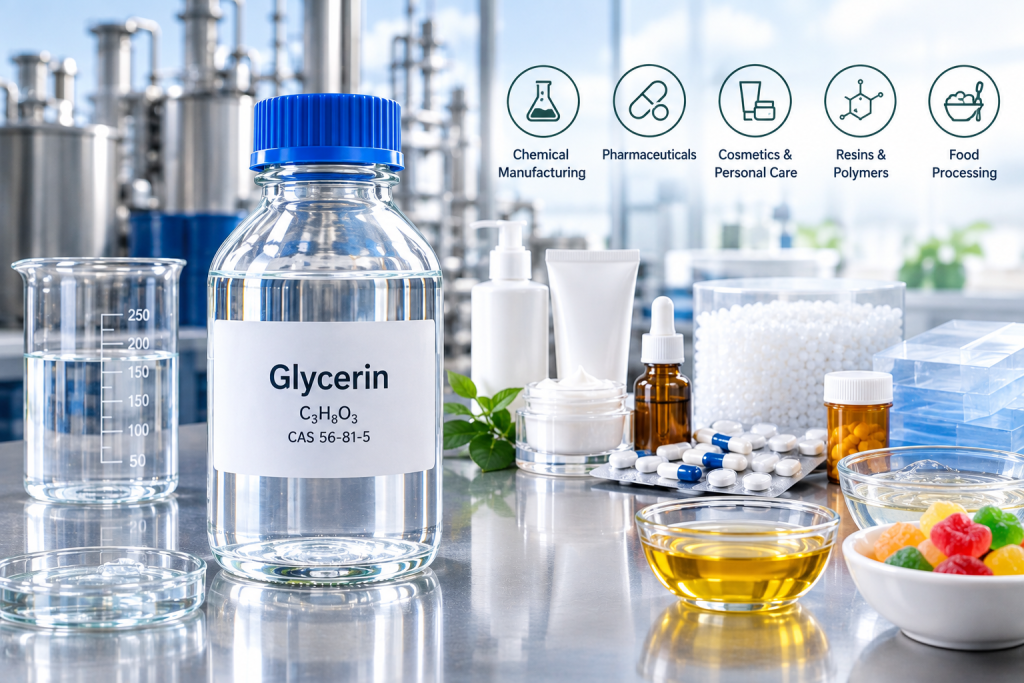
Glycerin, also known as glycerol, is a versatile chemical raw material used in pharmaceutical formulations, cosmetics, personal care products, resin manufacturing, and other industrial applications. Its moisture-retention properties, water compatibility, and relatively low volatility make it useful as a humectant, solvent, carrier, or formulation component. The appropriate grade depends on purity, application requirements, and applicable quality standards.
Glycerin: Quick Chemical Specifications
| Property | Typical Value |
|---|---|
| Chemical name | Glycerol |
| Common name | Glycerin |
| Molecular formula | C₃H₈O₃ |
| CAS number | 56-81-5 |
| EC number | 200-289-5 |
| Molecular weight | 92.09 g/mol |
| Appearance | Clear, colorless, viscous liquid |
| Melting point | Approximately 17.8°C for pure glycerol |
| Boiling point | Approximately 290°C, with decomposition possible |
| Density | Approximately 1.26 g/cm³ at 20°C for pure glycerol |
| Water solubility | Miscible |
| Volatility | Low compared with many common organic solvents |
These values are reference figures for pure glycerol. Commercial products can differ in concentration, water content, and other specifications. Confirm the actual grade using the supplier’s technical data sheet (TDS) and certificate of analysis (CoA). For additional chemical information, consult PubChem’s glycerol record.
What Is Glycerin?
Glycerol is a three-carbon alcohol containing three hydroxyl groups. It can be obtained through different manufacturing processes and is also produced as a by-product of biodiesel production and soap manufacturing. Its molecular structure contributes to its ability to attract moisture and mix readily with water.
These characteristics allow manufacturers to use the material in formulations that require moisture control, specific viscosity, or compatibility with aqueous ingredients. Its performance depends on the grade, concentration, and other components in the formulation.
Major Industrial Applications
1. Pharmaceutical Manufacturing
In pharmaceutical formulations, glycerol can function as a humectant, solvent, carrier, or other formulation component, depending on the product. It may help maintain moisture or support the consistency of certain liquid and semisolid preparations.
Pharmaceutical applications require appropriate purity, traceability, and quality documentation. Manufacturers must select a grade that meets the relevant pharmacopeial requirements and regulatory standards for the intended product.
2. Cosmetics and Personal Care
Glycerin is widely used in personal care products because it attracts and retains moisture. Formulators may include it in creams, lotions, soaps, shampoos, and other products to help maintain moisture levels and achieve the desired texture.
The concentration should be selected according to the formulation’s performance, skin feel, stability, and compatibility requirements. Cosmetic manufacturers should verify ingredient quality and follow applicable product safety regulations.
3. Resins and Chemical Manufacturing
The three hydroxyl groups in glycerol allow it to participate in chemical reactions and serve as a building block for selected resins, polymers, and specialty chemicals. Its suitability depends on the reaction pathway, formulation design, and required product properties.
Manufacturers should review purity, moisture content, and potential impurities before incorporating it into a chemical process. Consistent raw material specifications can help support predictable production and finished-product quality.
4. Industrial Formulations
In selected industrial formulations, this polyol can act as a humectant, carrier, viscosity-modifying component, or plasticizing agent. Its low volatility can be useful when a formulation requires a component that remains present during storage or application.
However, the final function depends on the other ingredients and operating conditions. Compatibility testing should be completed before changing a formulation or introducing a new commercial grade.
5. Food Processing
Food-grade glycerol is used in certain food applications as a humectant, solvent, or formulation ingredient, subject to applicable regulations. Its moisture-related properties can help manufacturers achieve specific characteristics in selected products.
Food-grade material should not be replaced with a technical or industrial grade simply because the chemical name is the same. Buyers must verify grade certification, purity requirements, intended use, and regulatory compliance before purchase.
How to Select the Right Grade
Choosing a suitable grade requires identifying the intended application and checking whether the material meets the required specifications. Important purchasing considerations include:
- Purity: Confirm the glycerol content and allowable impurity limits.
- Water content: Check moisture specifications when concentration affects product performance.
- Application requirements: Distinguish technical, cosmetic, pharmaceutical, and food-grade requirements.
- Quality documentation: Request a current TDS, safety data sheet (SDS), and batch-specific CoA.
- Packaging: Confirm container compatibility, packaging size, and contamination prevention measures.
- Supply consistency: Review batch consistency, storage conditions, and delivery requirements.
Industrial buyers can review the Aasad Chimie product range and contact the team to discuss specifications, quantities, and sourcing requirements.
Safety and Storage
Glycerol generally has low volatility under normal ambient conditions, but proper handling and storage remain important. Spills can make floors slippery, and heating the material can create additional hazards. The specific precautions should follow the current SDS and workplace risk assessment.
- Keep containers closed and protect the product from contamination.
- Store it under the supplier’s recommended temperature and environmental conditions.
- Use compatible transfer equipment and suitable protective equipment where required.
- Clean spills promptly using approved site procedures to prevent slip hazards.
- Review the SDS before handling, transferring, or heating the material.
When the product is intended for regulated applications, storage and handling procedures should also protect its required quality and prevent cross-contamination.
Conclusion
Glycerin is a versatile raw material used in pharmaceutical products, cosmetics, resins, industrial formulations, and selected food applications. Its moisture-retention properties, water compatibility, and chemical functionality make it useful across different manufacturing sectors.
For reliable results, buyers should verify purity, water content, grade suitability, documentation, and storage requirements before purchasing. Visit the Aasad Chimie products page or contact the team to discuss your industrial chemical requirements.
References
What is glycerin mainly used for?
Glycerin is used in pharmaceutical formulations, cosmetics, personal care products, resin manufacturing, and selected industrial processes. Depending on the formulation, it can function as a humectant, solvent, carrier, or plasticizing component. Its grade must match the intended application and required quality standards.
What is the difference between glycerin and glycerol?
Glycerin and glycerol are commonly used names for the same chemical substance, identified by the formula C₃H₈O₃. Commercial products sold under these names may differ in purity, concentration, and grade. Buyers should therefore check the specification rather than relying on the product name alone.
Is glycerin soluble in water?
Yes. Pure glycerol is miscible with water, meaning it can mix with water in all proportions. This property makes it useful in many aqueous formulations, although the final viscosity and performance depend on concentration, temperature, and the other ingredients present.
How should industrial buyers choose a glycerin grade?
Buyers should check purity, water content, intended application, packaging, and batch documentation. Pharmaceutical and food applications may require specific quality standards that technical grades do not meet. A current technical data sheet and certificate of analysis can help verify suitability.
How should glycerin be stored?
It should be stored in clean, compatible, tightly closed containers under the supplier's recommended conditions. Protecting it from contamination helps maintain product quality. Spills should be cleaned promptly because the liquid can create slippery surfaces.