


Table of Contents
- What Are Bio-Based Solvents?
- Industrial Applications of Bio-Based Solvents
- 1. Paints and Coatings
- 2. Adhesives and Sealants
- 3. Printing Inks
- 4. Cleaning and Chemical Processing
- Key Benefits and Limitations
- How Do Bio-Based Solvents Compare with Conventional Solvents?
- How to Select the Right Bio-Based Solvent
- Safety and Environmental Considerations
- Conclusion
- What are bio-based solvents?
- Are bio-based solvents environmentally friendly?
- Can bio-based solvents replace conventional industrial solvents?
- Are bio-based solvents always low VOC?
- Which industries use bio-based solvents?
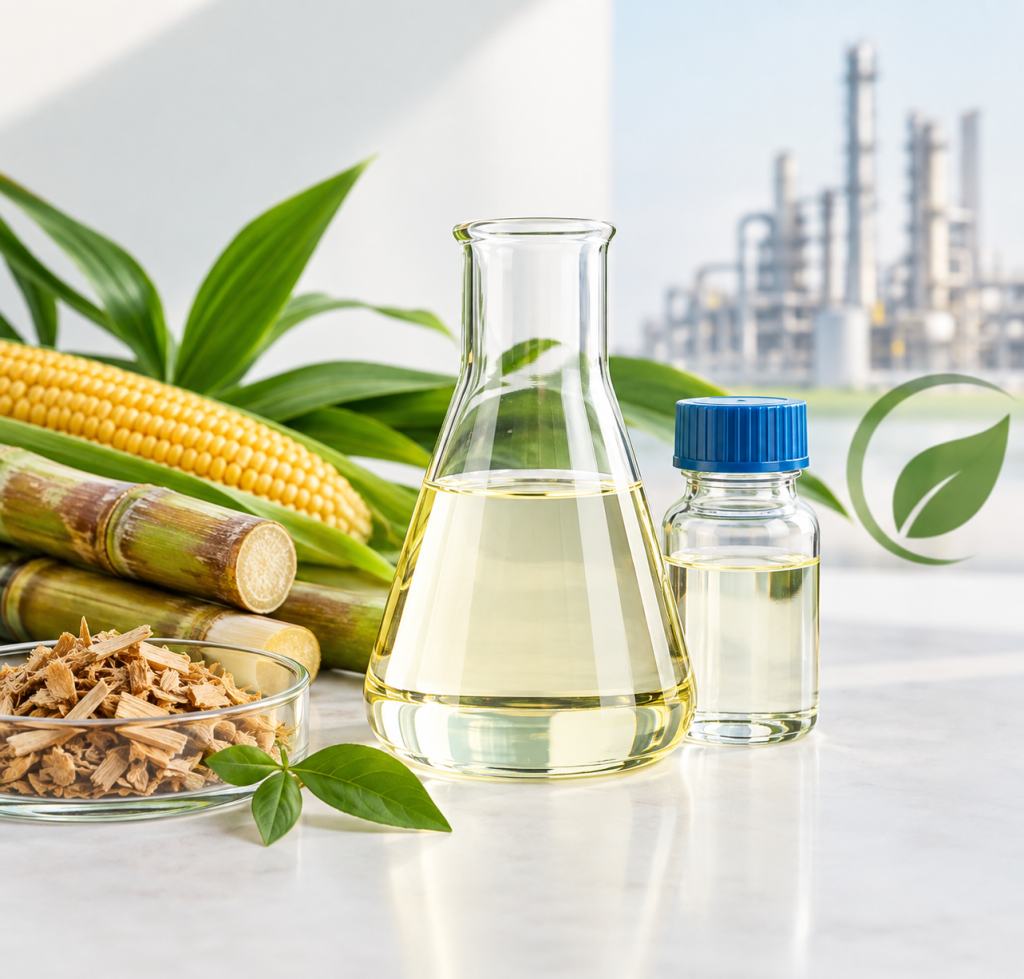
Bio-based solvents are solvents produced partly or entirely from renewable biological resources, such as plant oils, sugars, and agricultural materials. These materials can provide alternatives to conventional petroleum-derived solvents in selected industrial applications. Understanding their properties, limitations, and compatibility helps manufacturers choose suitable solvents for coatings, adhesives, printing, and chemical processing.
What Are Bio-Based Solvents?
Bio-based solvents are derived from renewable feedstocks through chemical, biochemical, or physical processes. Depending on their composition, they may offer useful solvency, controlled evaporation, and compatibility with specific resins or formulations. However, renewable origin alone does not guarantee low toxicity, low VOC emissions, or a lower environmental impact.
The performance of each solvent depends on its chemical structure, purity, boiling point, evaporation rate, and interaction with other formulation ingredients. Manufacturers should evaluate technical specifications and safety documentation before replacing an established industrial solvent.
Industrial Applications of Bio-Based Solvents
Bio-based solvents can support several manufacturing processes when their technical properties match the requirements of the final product.
1. Paints and Coatings
In paints and coatings, renewable solvents may help dissolve or disperse formulation ingredients, adjust viscosity, and support application. Their suitability depends on resin compatibility, drying time, film formation, surface quality, and resistance requirements. Formulators should conduct performance tests before using them as replacements for conventional coating solvents.
2. Adhesives and Sealants
Some bio-derived solvents can be used in adhesive and sealant formulations to help control viscosity and support the distribution of formulation components. Selection depends on polymer compatibility, bonding strength, substrate sensitivity, drying behavior, and the intended application method.
For related formulation guidance, see our overview of industrial solvents.
3. Printing Inks
Printing ink manufacturers evaluate solvent systems according to pigment dispersion, resin solubility, transfer properties, drying speed, and print quality. Selected renewable solvents may be appropriate for specific ink systems, but they must meet production speed and substrate requirements.
4. Cleaning and Chemical Processing
In industrial cleaning and chemical processing, suitable solvents can remove oils, residues, and other contaminants or support particular separation and formulation steps. The cleaning target, equipment materials, recovery requirements, and worker exposure limits should guide solvent selection.
Key Benefits and Limitations
The potential advantages of bio-based solvents include the use of renewable feedstocks and opportunities to reduce dependence on fossil resources. Depending on the product and production method, they may also support sustainability targets or provide useful performance in specialized formulations.
Nevertheless, these solvents are not automatically safer or more environmentally friendly than conventional alternatives. Some may be flammable, irritating, slow to evaporate, or unsuitable for certain polymers and coatings. A meaningful comparison should consider solvent performance, occupational hazards, VOC regulations, feedstock sourcing, and life-cycle impacts.
How Do Bio-Based Solvents Compare with Conventional Solvents?
Conventional petroleum-derived solvents are widely used because their performance, supply chains, and formulation behavior are often well established. Renewable alternatives may provide benefits in selected applications, but their evaporation rates, solvency, cost, and compatibility can differ significantly.
For example, replacing a conventional solvent without checking resin compatibility may affect viscosity, drying time, coating appearance, or adhesive strength. Manufacturers should compare technical data sheets and run controlled trials rather than choosing a product solely because it has a renewable origin.
Learn more about alternative formulations in our guide to low-VOC solvents and our overview of bio-based solvent solutions.
How to Select the Right Bio-Based Solvent
Choosing suitable bio-based solvents requires a balance between technical performance, safety, cost, and environmental objectives. Before making a purchasing decision, manufacturers should review the following factors:
- Solvency: Confirm compatibility with the resin, polymer, oil, or other material being processed.
- Evaporation rate: Check whether the solvent supports the required drying time and production speed.
- Material compatibility: Test its effect on substrates, equipment, seals, and packaging materials.
- Safety: Review the safety data sheet, flammability, exposure limits, and handling requirements.
- Regulatory compliance: Verify VOC classification and any industry-specific restrictions in the destination market.
- Supply and cost: Compare availability, consistency, total formulation cost, and supply reliability.
Manufacturers sourcing industrial chemicals can explore the Aasad Chimie product range and review the relevant specifications before selecting a material.
Safety and Environmental Considerations
Every solvent should be assessed according to its specific chemical hazards rather than its feedstock alone. Review the safety data sheet, use appropriate ventilation and personal protective equipment, and follow storage and fire-prevention requirements. The United Nations Globally Harmonized System (GHS) provides a framework for classifying and communicating chemical hazards.
Environmental performance should also be evaluated carefully. Renewable feedstocks may reduce reliance on fossil resources, but agricultural inputs, manufacturing energy, transport, solvent recovery, and end-of-life treatment can influence the overall environmental footprint.
Conclusion
Bio-based solvents can offer practical alternatives for selected coating, adhesive, printing, cleaning, and chemical processing applications. Their suitability depends on solvency, compatibility, evaporation, safety, regulatory requirements, and overall cost. Testing the material in the intended formulation is essential before switching from a conventional solvent.
For product information or assistance with industrial chemical sourcing, visit Aasad Chimie products or contact our team to discuss your requirements.
What are bio-based solvents?
Bio-based solvents are produced partly or entirely from renewable biological resources, including plant oils, sugars, and agricultural materials.
Are bio-based solvents environmentally friendly?
Some may offer environmental advantages, but their overall impact depends on feedstock sourcing, manufacturing, transport, chemical hazards, and life-cycle performance.
Can bio-based solvents replace conventional industrial solvents?
Yes, in selected applications, provided they meet the required solvency, compatibility, safety, and performance specifications.
Are bio-based solvents always low VOC?
No. Renewable origin and VOC classification are different characteristics. VOC content and regulatory status must be evaluated for each product.
Which industries use bio-based solvents?
Potential applications include paints and coatings, adhesives, printing inks, industrial cleaning, and selected chemical processing operations.