


Table of Contents
- 1. Chemical Identity and Structure
- 2. Physical and Chemical Properties
- 3. Available Industrial Grades
- 4. Role in Polyester and PET Production
- 5. Use in Antifreeze and Automotive Cooling Systems
- 6. Industrial Heat Transfer Fluid
- 7. Safety and Storage Guidelines
- How Mono Ethylene Glycol Is Produced
- Quality Control and Sourcing Considerations
- MEG vs. Diethylene Glycol (DEG)
- Frequently Asked Questions
- Conclusion
Mono Ethylene Glycol (MEG) is one of the most widely used industrial chemicals in the petrochemical, polymer, and textile sectors. Known also simply as ethylene glycol, this colorless organic compound plays an essential role in polyester fiber production, PET packaging, and automotive antifreeze formulations. Below are seven key facts every buyer and technical manager should know about MEG.

1. Chemical Identity and Structure
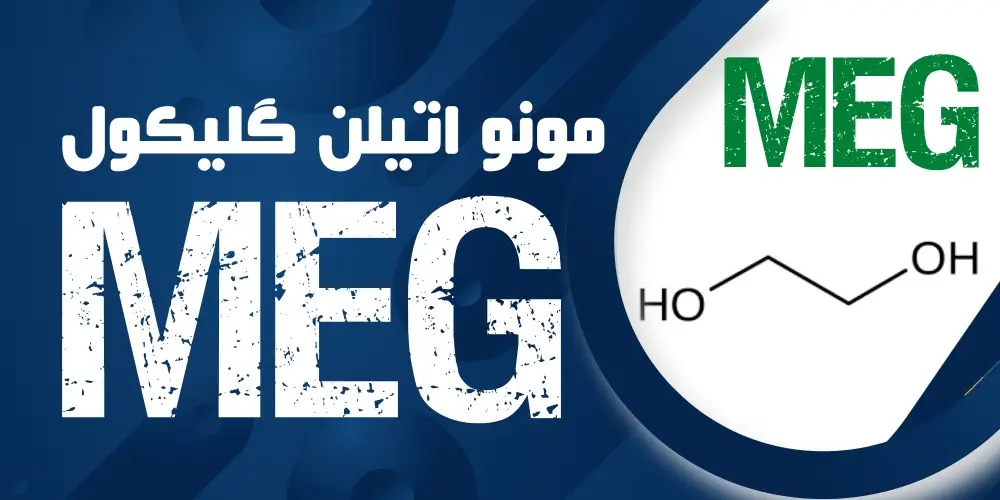
Mono Ethylene Glycol is a diol (a molecule with two hydroxyl groups) with the chemical formula C2H6O2. It is industrially produced through the hydration of ethylene oxide. Its CAS registry number is 107-21-1, and its molecular weight is approximately 62.07 g/mol.
2. Physical and Chemical Properties
MEG’s thermal stability and unique physical characteristics are the main reasons for its broad industrial use. The table below summarizes its most important technical specifications:
| Property | Value |
|---|---|
| Chemical formula | C2H6O2 |
| Molecular weight | 62.07 g/mol |
| Boiling point | ≈ 197°C |
| Freezing point | ≈ -13°C |
| Flash point (closed cup) | ≈ 111°C |
| Density (at 20°C) | ≈ 1.113 g/cm³ |
| Viscosity (at 20°C) | ≈ 16.1 mPa·s |
| Water solubility | Fully miscible |
These values may vary slightly depending on the product grade (fiber grade vs. industrial grade). For further reference data and safety information, see the PubChem database.
3. Available Industrial Grades
MEG is supplied in several grades, each suited to a specific application:
- Fiber Grade: The highest purity grade, used exclusively in polyester fiber and PET resin production.
- Industrial Grade: Slightly lower purity, used in resins, antifreeze formulations, and heat transfer fluids.
- Antifreeze Grade: Typically pre-blended with corrosion inhibitors for use in automotive cooling systems.
Choosing the correct grade directly affects final product quality, process stability, and equipment lifespan. Aasad Chemie’s technical team can help recommend the optimal grade for your production line.
4. Role in Polyester and PET Production
The largest share of global MEG consumption goes into the textile and packaging industries. Combined with terephthalic acid through a polymerization reaction, MEG forms polyethylene terephthalate (PET) — the base material for polyester fibers and beverage bottles.
5. Use in Antifreeze and Automotive Cooling Systems
Due to its low freezing point and effective heat transfer properties, MEG is a core component of automotive antifreeze and engine coolant formulations, protecting cooling systems in cold climates.
6. Industrial Heat Transfer Fluid
In HVAC systems and industrial processes that require precise temperature control, MEG is used as a heat transfer fluid thanks to its stability across a wide temperature range.

For complementary polymer additives, see our articles on
impact modifiers for polypropylene
and
chain extenders for recycled polyolefins.
7. Safety and Storage Guidelines
Despite its wide use, MEG must be handled and stored with care:
- Avoid direct skin and eye contact; use appropriate personal protective equipment (gloves and safety goggles).
- Store tanks at ambient temperature, away from direct heat sources.
- Due to its toxicity if ingested, keep it out of reach of untrained personnel.
- Storage areas should have proper ventilation in line with HSE standards.
For additional safety data, refer to the
International Chemical Safety Card (ICSC).
How Mono Ethylene Glycol Is Produced
MEG is manufactured on an industrial scale primarily through the hydration of ethylene oxide, which itself is derived from ethylene via a catalytic oxidation process. The reaction produces a mixture of mono-, di-, and triethylene glycol, which are then separated through multi-stage vacuum distillation. Producers carefully control reaction conditions — including temperature, pressure, and the water-to-ethylene-oxide ratio — to maximize the yield of the mono-glycol fraction, since MEG typically commands the highest commercial value among the glycol co-products. Quality control at this stage focuses on minimizing color, moisture content, and trace aldehydes, all of which can affect downstream polymerization in polyester production.
Quality Control and Sourcing Considerations
When sourcing MEG for industrial use, buyers should request a certificate of analysis (COA) confirming purity, water content, color (APHA scale), and acidity level, since these parameters directly affect polymer molecular weight and fiber quality in downstream processes. Working with a supplier that offers consistent batch-to-batch quality and proper documentation reduces the risk of production disruptions.
MEG vs. Diethylene Glycol (DEG)
A common question in the industry is the difference between MEG and DEG. Mono Ethylene Glycol contains a single ethylene unit, while Diethylene Glycol is composed of two ethylene glycol units and has a higher boiling point and viscosity. The choice between the two depends on the end application and process requirements.
Frequently Asked Questions
Is Mono Ethylene Glycol toxic?
Yes, it can be hazardous to humans and animals if ingested and must be stored and handled according to safety guidelines.
What state is MEG at room temperature?
It is a clear, colorless liquid at room temperature and remains liquid down to approximately -13°C.
Does Mono Ethylene Glycol react with water?
No chemical reaction occurs; however, it is fully miscible with water, which is one of the reasons it is used in antifreeze formulations.
Conclusion
Mono Ethylene Glycol is a strategically important chemical thanks to its stable physical properties and broad use across the polymer, textile, and automotive industries. Selecting the right grade and following proper safety and storage practices ensures consistent final product quality.
Aasad Chemie, a supplier of chemical and polymer raw materials, is ready to provide technical consultation and supply MEG in various grades. Contact our technical team at
Aasad Chemie
for more information.